Trifecta

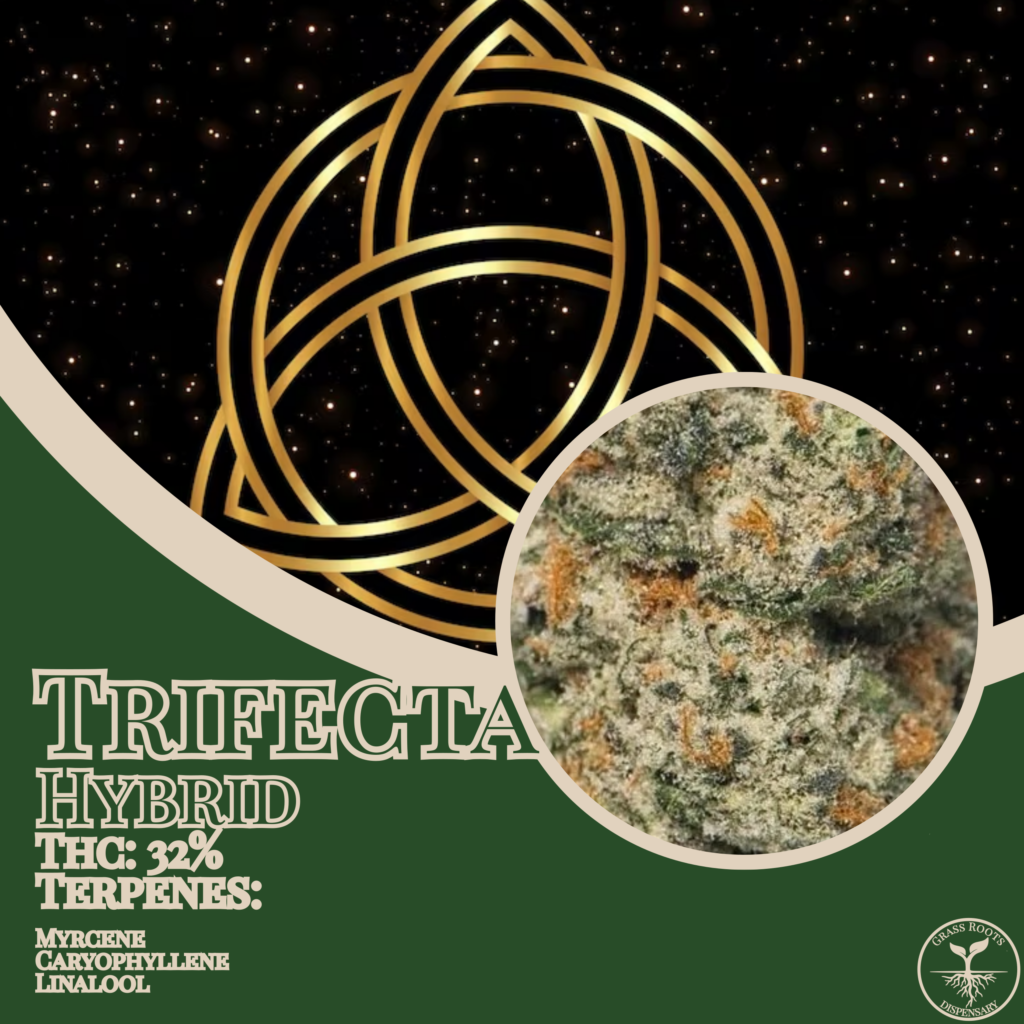
Strain of the Week: Trifecta

Trifecta from Dark Horse brings a fitting name to this week’s Strain of the Week. At 32% THC, this Kentucky hybrid is led by a three-part terpene lineup of myrcene, caryophyllene, and linalool, bringing together earthy herbs, warm spice, and softer floral character in one batch-specific profile.
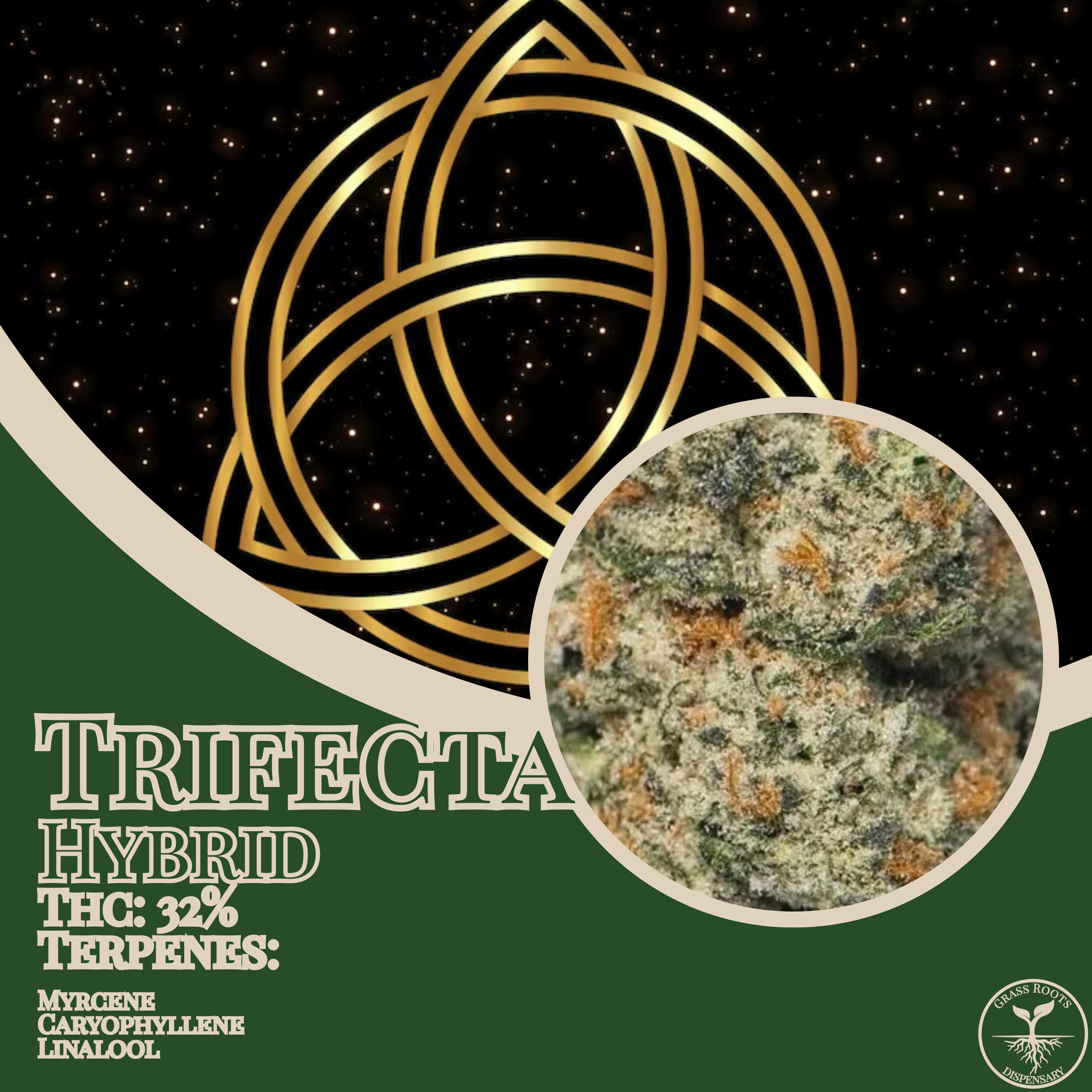
With a name like Trifecta, three seems like the right place to start.

This Dark Horse hybrid comes in at 32% THC, with three leading terpenes that each bring a different aromatic family to the profile: myrcene, caryophyllene, and linalool.

Myrcene moves toward earth and herbs. Caryophyllene introduces warm pepper and spice. Linalool adds a softer floral and botanical layer.

That gives us a true terpene trifecta to explore — and another useful example of why the biggest number on a cannabis label is only one part of the story.

Getting to Know Trifecta

Researching a strain usually begins with its name and genetics. With Trifecta, that requires a little more care.

The name “Trifecta” has been attached to more than one cannabis cultivar over the years, and publicly available genetic descriptions are not consistent enough to confidently assign one of those lineages to this specific Dark Horse Kentucky product.

So instead of guessing, we can focus on what we actually know about the product in front of us: it is a Dark Horse hybrid at 32% THC, with myrcene, caryophyllene, and linalool leading the terpene profile.

Sometimes good cannabis education means knowing when the available information supports an answer — and when it doesn’t.

Why Trifecta Stands Out

The first thing likely to catch attention on this Trifecta batch is its 32% THC. It is a prominent number, but it is not the only useful information on the product.

The terpene lineup gives us another layer to examine.

Myrcene, caryophyllene, and linalool do not all point in the same aromatic direction. Instead, they move across earthy and herbal, peppery and spicy, and floral and botanical territory.

That contrast is what makes this profile especially useful for Strain of the Week. We can take one product and see how several pieces of label information work together rather than treating THC percentage as a complete description.

For patients learning how to read medical cannabis labels, Trifecta gives us plenty to talk about.

Terpene Profile

Myrcene

Myrcene leads this Trifecta batch. It is commonly associated with earthy, herbal, and musky aromatic characteristics and also occurs naturally in plants such as hops, thyme, and mango. In a profile with deeper gas-forward characteristics, myrcene can help reinforce that earthy and herbal foundation.

Caryophyllene

Caryophyllene adds warmth and spice. Commonly associated with peppery, woody, and spicy aromatic characteristics, it is also naturally present in black pepper, cloves, and cinnamon. Here, it gives the profile a sharper aromatic counterpoint to myrcene’s earthier character.

Linalool

Linalool takes the profile in yet another direction. Known for floral, botanical, and lightly sweet aromatic characteristics, linalool is also naturally present in lavender. Its presence is especially interesting alongside myrcene and caryophyllene because it introduces a softer aromatic layer against all that earth and spice.

Flavor and Aroma

Dark Horse Trifecta has been described in Kentucky product information as having a rich, gas-forward aromatic profile with creamy and floral undertones and citrus character.

The leading terpenes help us understand some of the layers sitting underneath that description.

Myrcene brings earth and herbs. Caryophyllene contributes warm pepper and spice. Linalool provides the clearest connection to the softer floral side of the profile.

Taken together, think deep earthy and herbal character, warm spice, florals, and brighter accents around a richer aromatic foundation.

A Closer Look at the Profile

At 32% THC, potency is an obvious part of this Trifecta batch’s label. But a percentage alone cannot tell us everything about a cannabis product.

The terpene profile gives us information about aromatic composition that THC percentage simply does not provide.

In Trifecta, the three terpenes we are highlighting cover distinctly different aromatic territory. Myrcene is earthy and herbal. Caryophyllene is warm and spicy. Linalool is floral and botanical.

Looking at those details alongside the cannabinoid information gives patients a more complete picture of the product label than focusing on THC alone.

What the Hybrid Label Tells Us

Trifecta is classified as a hybrid. That gives us a broad category, but it does not tell us the product’s complete chemical or aromatic profile.

A hybrid label does not tell us that this batch contains 32% THC. It does not tell us that myrcene leads the terpene profile. And it does not reveal the combination of earthy, spicy, and floral aromatic characteristics represented by its leading terpenes.

Those details come from looking deeper into the actual product information.

The hybrid classification is one piece of the puzzle. Cannabinoid and terpene information adds more pieces around it.

What Patients Can Learn From It

Trifecta gives us several useful lessons about evaluating medical cannabis product information.

  • A high THC percentage is still only one measurement on the label
  • Terpenes can add important information about a product’s aromatic profile
  • Hybrid is a broad classification rather than a complete chemical description
  • The same strain name can sometimes be associated with different reported genetics
  • When genetic information cannot be confidently verified for a specific product, it is better to acknowledge the uncertainty than fill in the gap
  • Batch-specific information is especially useful when comparing general strain descriptions with an actual product
```

Why It Made the Cut at Grass Roots

Trifecta made the cut because this batch gives us an unusually clear opportunity to talk about the information patients see first — and the information worth looking for next.

The 32% THC figure stands out immediately. But look a little deeper and we find a three-part terpene profile that moves through earth, herbs, spice, and florals.

There is also a lesson in the cultivar name itself. Because multiple genetic descriptions exist for strains called Trifecta and we could not confidently connect one of them to this specific Dark Horse flower, the responsible approach is to focus on the product information we can verify.

That is exactly what Strain of the Week at Grass Roots Kentucky is here to do: look beyond the headline numbers and help medical cannabis patients better understand the information behind the product.

Explore Trifecta

Want to learn more about this week’s featured strain? View Trifecta from Dark Horse on the Grass Roots Kentucky medical cannabis menu for current product information.

View Trifecta

Quick Strain Snapshot

  • Strain: Trifecta
  • Grower: Dark Horse
  • Type: Hybrid
  • THC: 32%
  • Terpenes: Myrcene, Caryophyllene, Linalool
  • Lineage: Not confidently verified for this Dark Horse cultivar
  • Aroma Notes: Earthy, herbal, warm spice, floral, gas-forward, creamy, citrus accents
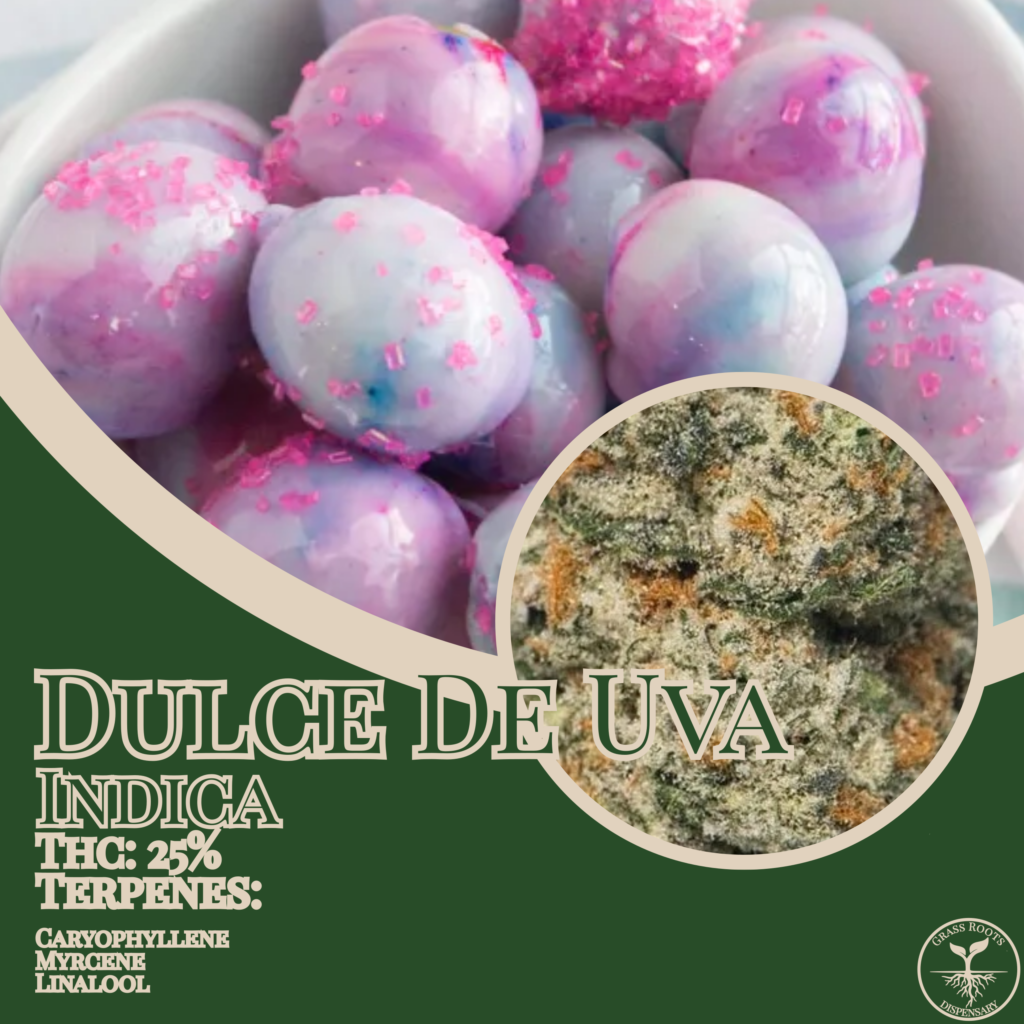
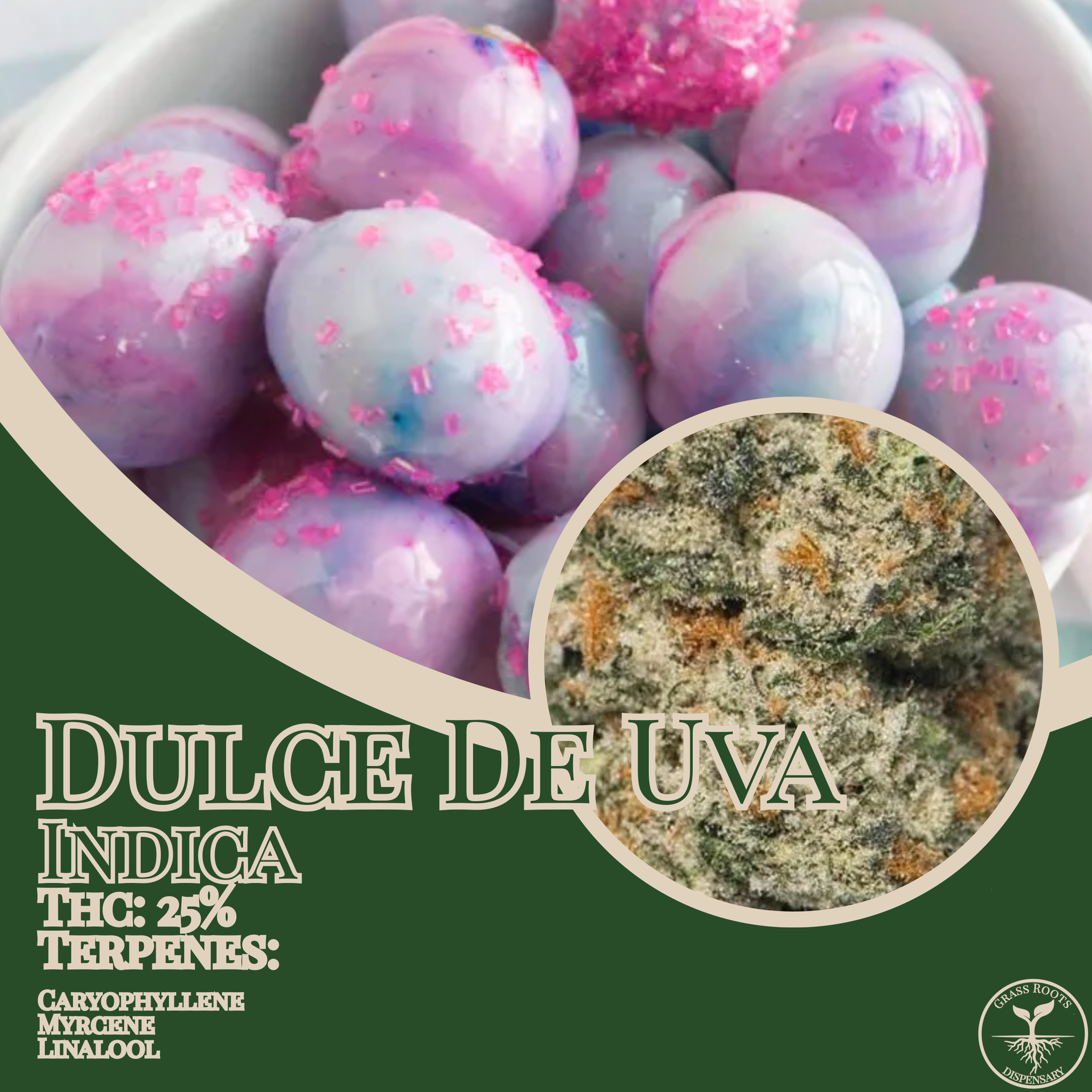
Dulce De Uva

Strain of the Week: Dulce De Uva

Dulce De Uva from VIVID brings grape-inspired genetics together with a Kentucky batch profile worth exploring beyond the name. At 25% THC, this week’s featured indica is led by caryophyllene, linalool, and myrcene, creating an aromatic combination that moves through warm spice, softer floral notes, earth, and herbs beneath the cultivar’s sweeter grape-forward identity.

Some strain names make you curious. Dulce De Uva practically tells you where to start.

The name translates roughly to “sweet grape,” and grape-inspired character is central to this cultivar’s identity. VIVID identifies Dulce De Uva as a cross of Grape Pie × OG Kush, bringing together fruit-forward genetics with the earthy depth associated with the OG side of its family tree.

For this Kentucky product, however, the most useful information comes from the actual batch in front of us: 25% THC, an indica classification, and caryophyllene, linalool, and myrcene leading the terpene profile.

Those three terpenes add considerably more detail to the story behind the name.

Getting to Know Dulce De Uva

VIVID lists Dulce De Uva’s genetics as Grape Pie × OG Kush.

It is an interesting pairing. Grape Pie brings a name and genetic background closely associated with sweet, fruit-forward character, while OG Kush is one of the better-known names in modern cannabis genetics and is frequently associated with earthier, deeper aromatic characteristics.

Together, they give Dulce De Uva a foundation that can move between grape and berry sweetness, earth, deeper aromatic notes, and dessert-like character.

The Kentucky batch adds its own fingerprint to that foundation, with caryophyllene, linalool, and myrcene forming the leading terpene trio.

Why Dulce De Uva Stands Out

Dulce De Uva gives us a great example of how genetics and batch-specific chemistry can tell different parts of the same story.

The genetics help explain the cultivar’s grape-inspired identity. The terpene profile tells us more about this particular Kentucky product.

Caryophyllene introduces warm pepper and spice. Linalool moves toward softer floral and botanical territory. Myrcene adds earth, herbs, and musk.

That means the aromatic picture is more complex than “sweet grape.” There are several contrasting aromatic families sitting underneath the fruit-forward identity suggested by the name.

And that is exactly why a strain name should be the beginning of the conversation rather than the end of it.

Terpene Profile

Caryophyllene

Caryophyllene leads this Dulce De Uva batch and brings warm, peppery, and spicy aromatic characteristics into the profile. This terpene is also naturally present in black pepper, cloves, and cinnamon. Against a grape-inspired genetic background, caryophyllene gives the sweeter side of the cultivar a noticeably spicier counterpoint.

Linalool

Linalool introduces another aromatic direction entirely. Commonly associated with floral, botanical, and lightly sweet characteristics, it is also naturally present in lavender. In this terpene trio, linalool sits between the warm spice of caryophyllene and the earthier character of myrcene.

Myrcene

Myrcene brings earthy, herbal, and musky aromatic characteristics to the profile. It also occurs naturally in plants including hops, thyme, and mango. Alongside caryophyllene and linalool, it helps give this Dulce De Uva batch a deeper foundation beneath its fruit-inspired identity.

Flavor and Aroma

The name Dulce De Uva points directly toward sweetness and grape, and VIVID’s description of the cultivar follows that same general direction with grape, berry, earthy, sweet, and deeper aromatic characteristics.

But the Kentucky terpene data lets us build a more detailed picture.

Caryophyllene suggests warm spice and pepper. Linalool adds floral softness. Myrcene brings earth and herbs. Layer those characteristics beneath grape and berry-inspired genetics and the result is a much broader aromatic profile than the name alone might suggest.

Think sweet grape and berry character surrounded by warm spice, florals, earth, herbs, and deeper notes.

A Closer Look at the Profile

25% THC is one of the easiest numbers to spot on this Dulce De Uva product, but it is only one measurement.

The terpene information gives us another way to understand the batch. Rather than three closely related aromatic compounds, its leading trio moves across several different categories: spice from caryophyllene, florals from linalool, and earthy herbs from myrcene.

That matters because THC percentage alone does not describe a product’s complete chemical profile, genetics, or aromatic composition.

For Kentucky medical cannabis patients learning how to read product information, Dulce De Uva is another good reminder to look at the whole label instead of stopping at the largest number.

What the Indica Label Tells Us

This Kentucky Dulce De Uva product is classified as an indica. That gives us one piece of information about how the product is categorized, but the label does not tell the whole story by itself.

In fact, VIVID’s broader genetics library categorizes Dulce De Uva as a hybrid. Differences like this are a useful reminder that indica, sativa, and hybrid labels are broad classifications and can vary between product listings and markets.

For this specific Kentucky product, we can be more precise about what is actually listed: 25% THC with caryophyllene, linalool, and myrcene leading the terpene profile.

The classification gives us a starting point. Batch-specific cannabinoid and terpene information gives us additional detail.

What Patients Can Learn From It

Dulce De Uva gives us several useful lessons about reading medical cannabis product information.

  • A strain name can hint at aromatic character without describing the complete product
  • Genetics can provide context for where a cultivar comes from
  • Indica, sativa, and hybrid are broad classifications rather than complete chemical descriptions
  • THC percentage represents only one measurement
  • Terpene information can reveal aromatic characteristics that are not obvious from the strain name
  • Batch-specific product information deserves close attention because individual products can differ from generic cultivar descriptions

Why It Made the Cut at Grass Roots

Dulce De Uva made the cut because there is more going on here than a memorable name.

The Grape Pie × OG Kush genetics give us a clear genetic foundation to explore, while this Kentucky batch’s caryophyllene, linalool, and myrcene profile adds warm spice, florals, earth, and herbs around that grape-forward identity.

It is also a particularly useful example of why we separate general strain information from the details attached to an actual product. VIVID’s broader cultivar information gives us context, but the Kentucky label tells us what is specific to this batch.

That is what Strain of the Week at Grass Roots Kentucky is all about: helping medical cannabis patients understand the information behind the name, one cultivar at a time.

Explore Dulce De Uva

Want to learn more about this week’s featured strain? View Dulce De Uva from VIVID on the Grass Roots Kentucky medical cannabis menu for current product information.

View Dulce De Uva

Quick Strain Snapshot

  • Strain: Dulce De Uva
  • Grower: VIVID
  • Type: Indica
  • THC: 25%
  • Terpenes: Caryophyllene, Linalool, Myrcene
  • Lineage: Grape Pie × OG Kush
  • Aroma Notes: Grape, berry, warm spice, floral notes, earth, herbs

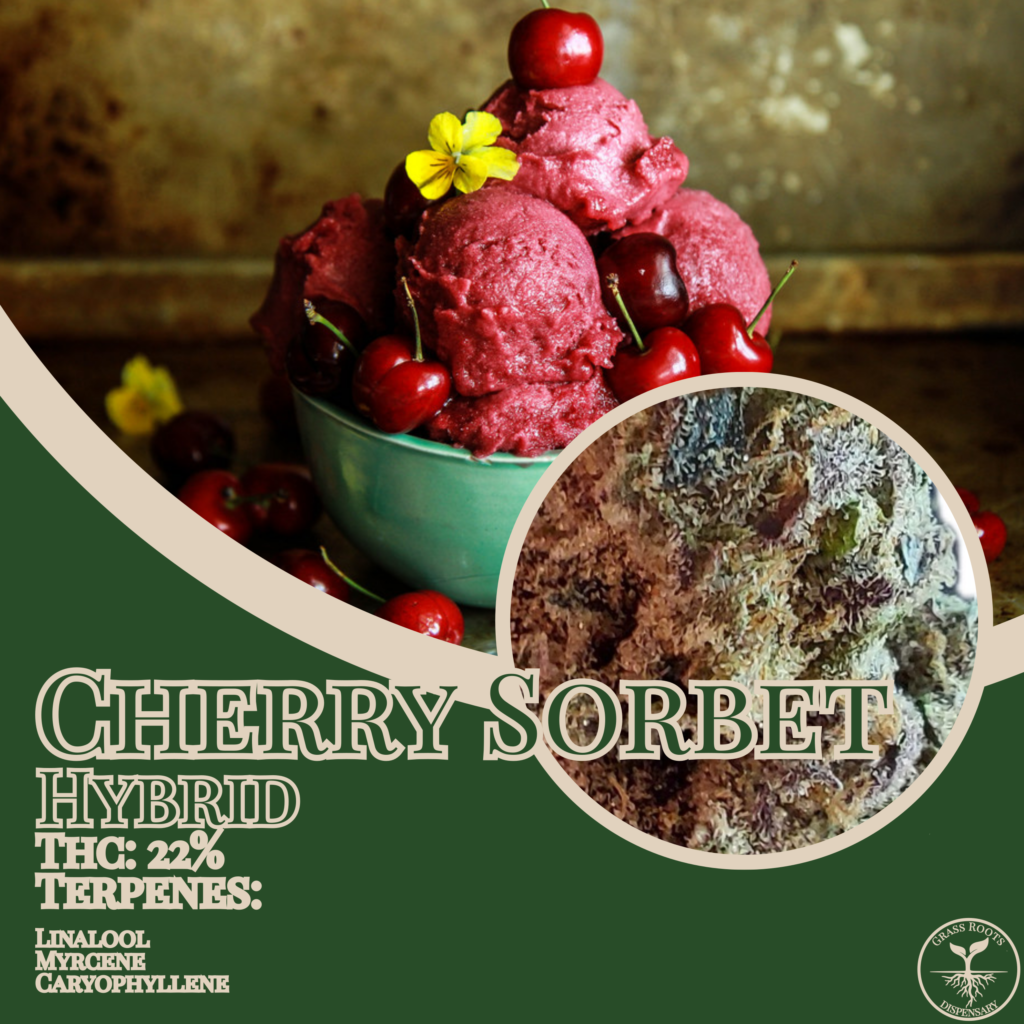
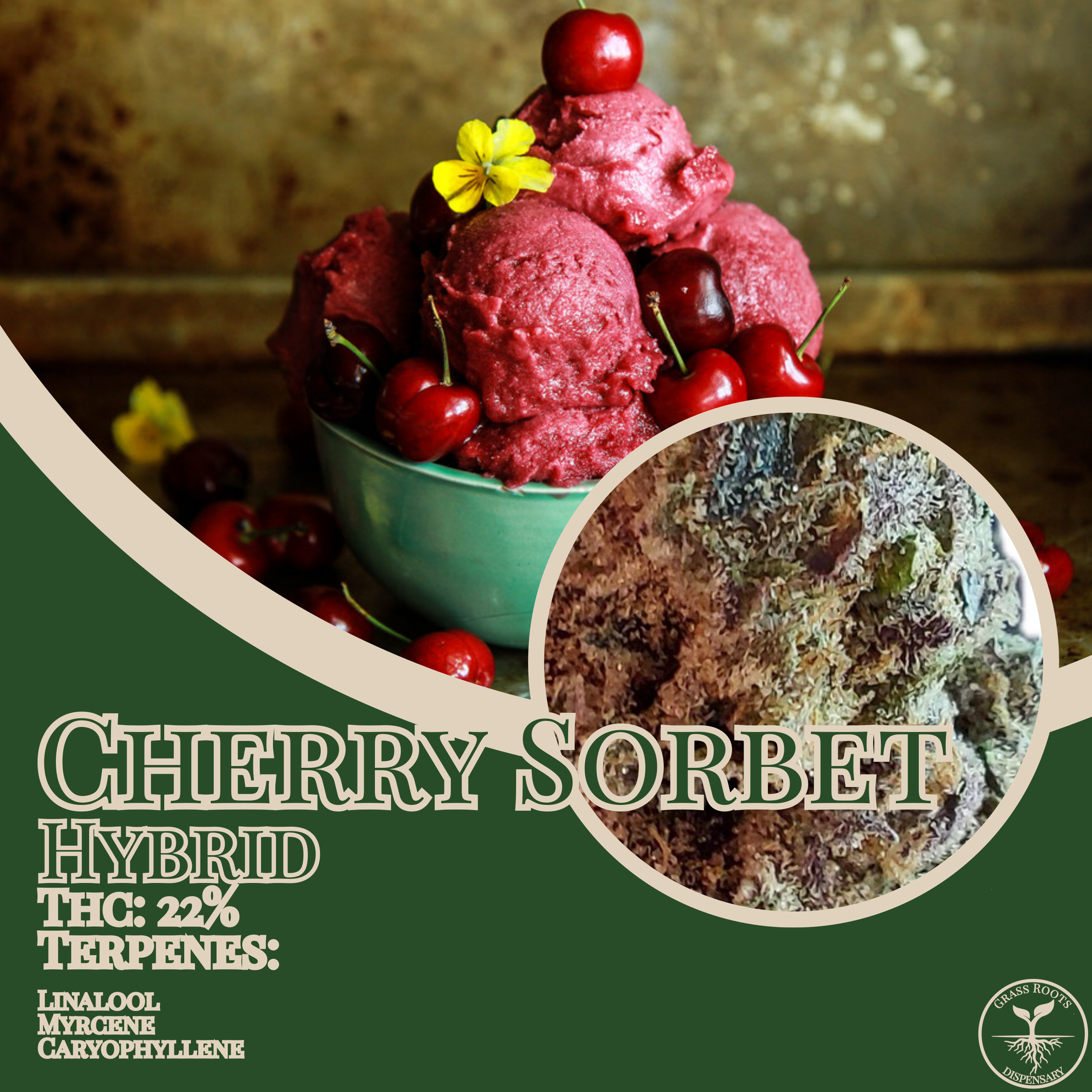
Cherry Sorbet

Strain of the Week: Cherry Sorbet

Cherry Sorbet from Vivid pairs dessert-inspired genetics with an indica-hybrid profile that has plenty to explore beyond its name. At 22% THC, this week’s featured flower is led by caryophyllene, myrcene, and linalool, bringing together warm spice, earthy herbs, and softer floral character alongside the sweeter influence associated with the cultivar.

With a name like Cherry Sorbet, sweet fruit and dessert-inspired character probably come to mind first. But the terpene profile of this Vivid batch gives us considerably more to talk about.

From Vivid, this indica-hybrid comes in at 22% THC with caryophyllene, myrcene, and linalool leading the terpene profile.

That combination creates contrast beneath the sweeter identity of the cultivar. Caryophyllene brings warm pepper and spice, myrcene contributes earthy and herbal depth, and linalool adds softer floral character. The result is a profile with several different aromatic families working together.

Getting to Know Cherry Sorbet

Vivid identifies Cherry Sorbet as an indica-dominant hybrid created from D33 × Cherry OG bx.

D33 is associated with dessert-style genetics, while Cherry OG brings cherry and classic OG influence into the family tree. Put those branches together and the name Cherry Sorbet starts to make a little more sense.

But genetics only give us part of the picture. For this Kentucky product, the actual batch information tells us what deserves the closest look: 22% THC with caryophyllene, myrcene, and linalool leading the terpene profile.

Why Cherry Sorbet Stands Out

Cherry Sorbet is a good example of the difference between what a strain name suggests and what the product label actually tells us.

The name points toward cherry sweetness and dessert-inspired character. The terpene profile adds earth, herbs, peppery spice, and florals to that picture.

That is where things become more interesting. Instead of looking at Cherry Sorbet as one simple flavor idea, we can see how several aromatic compounds contribute different layers to the overall cultivar.

It also demonstrates why looking beyond THC percentage can make learning about medical cannabis products much more informative.

Terpene Profile

Caryophyllene

Caryophyllene leads this Cherry Sorbet batch with warm, peppery, and spicy aromatic character. The terpene also occurs naturally in black pepper, cloves, and cinnamon. Against a cultivar with a dessert-inspired identity, that spice gives the profile an interesting counterpoint to its sweeter characteristics.

Myrcene

Myrcene moves the profile toward earthier territory. Commonly associated with earthy, herbal, and musky aromas, myrcene is also naturally present in plants such as hops, thyme, and mango. Here, it adds depth beneath the brighter and sweeter characteristics associated with Cherry Sorbet.

Linalool

Linalool rounds out the top three with softer floral and botanical character. Also naturally present in plants such as lavender, linalool gives this terpene lineup another point of contrast. Spice, earth, herbs, and florals can all sit within the same product profile.

Flavor and Aroma

Cherry Sorbet’s genetics point toward the sweeter side of the spectrum, with cherry, berry, creamy, earthy, and classic OG-style characteristics commonly associated with the cultivar.

This Kentucky batch’s terpene lineup gives that description more dimension. Caryophyllene adds peppery warmth, myrcene contributes earthy herbs, and linalool introduces softer floral notes.

Think sweet cherry and berry-inspired character layered over earth, herbs, warm spice, and softer floral notes rather than straightforward sweetness alone.

A Closer Look at the Profile

22% THC gives us one measurement for this Kentucky batch of Cherry Sorbet, but there is much more information available once we move beyond that single number.

The leading terpenes each contribute a different aromatic family. Caryophyllene brings spice, myrcene brings earthy and herbal character, and linalool adds a floral element.

That diversity is useful because it shows why two products with similar THC percentages can still have very different chemical and aromatic profiles.

THC tells us something about the product. The terpene profile helps us understand another part of what makes this particular batch distinctive.

What the Indica-Hybrid Label Tells Us

Vivid classifies Cherry Sorbet as an indica-dominant hybrid. That classification gives us one way to describe the cultivar, but it does not provide a complete picture of the chemistry inside a particular batch.

It does not tell us the THC percentage. It does not identify the leading terpenes. And it does not explain how those terpenes relate to one another.

For this Kentucky batch, we can add those details: 22% THC with caryophyllene, myrcene, and linalool leading the terpene profile.

The indica-hybrid label is a starting point. The rest of the product information helps fill in the picture.

What Patients Can Learn From It

Cherry Sorbet gives us several useful examples of what to look for when learning about a medical cannabis product.

  • Genetics can provide context for a cultivar’s background
  • A strain name can hint at aromatic characteristics without telling the complete story
  • THC percentage represents only one measurement on the product label
  • Individual terpenes contribute different aromatic characteristics
  • Looking at classification, cannabinoids, terpenes, and genetics together provides more information than relying on any one detail alone

Why It Made the Cut at Grass Roots

Cherry Sorbet made the cut because there is an interesting contrast between the name, genetics, and actual Kentucky batch profile.

Vivid’s D33 × Cherry OG bx genetics establish the cultivar’s dessert-inspired foundation, while caryophyllene, myrcene, and linalool give this particular batch a combination of warm spice, earthy herbs, and softer floral character.

At 22% THC, it also gives us another opportunity to look beyond the most visible number on the label and examine the other information available to Kentucky medical cannabis patients.

That is what Strain of the Week at Grass Roots Kentucky is for: helping patients understand not just what is written on the package, but what those details can tell us about the product inside.

Explore Cherry Sorbet

Want to learn more about this week’s featured strain? View Cherry Sorbet from Vivid on the Grass Roots Kentucky medical cannabis menu for current product information.

View Cherry Sorbet

Quick Strain Snapshot

  • Strain: Cherry Sorbet
  • Grower: Vivid
  • Type: Indica-Hybrid
  • THC: 22%
  • Terpenes: Caryophyllene, Myrcene, Linalool
  • Lineage: D33 × Cherry OG bx
  • Aroma Notes: Sweet cherry, berry, earth, herbs, warm spice, subtle floral notes

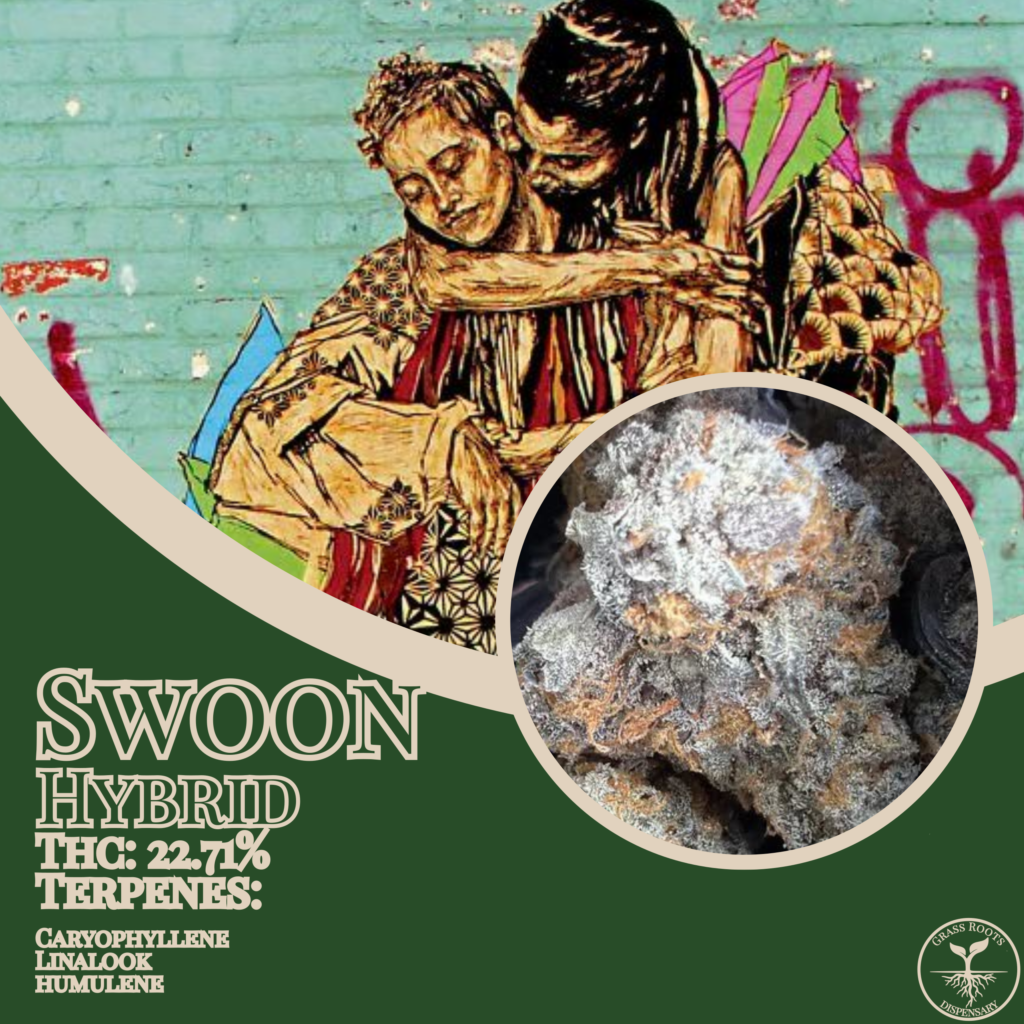
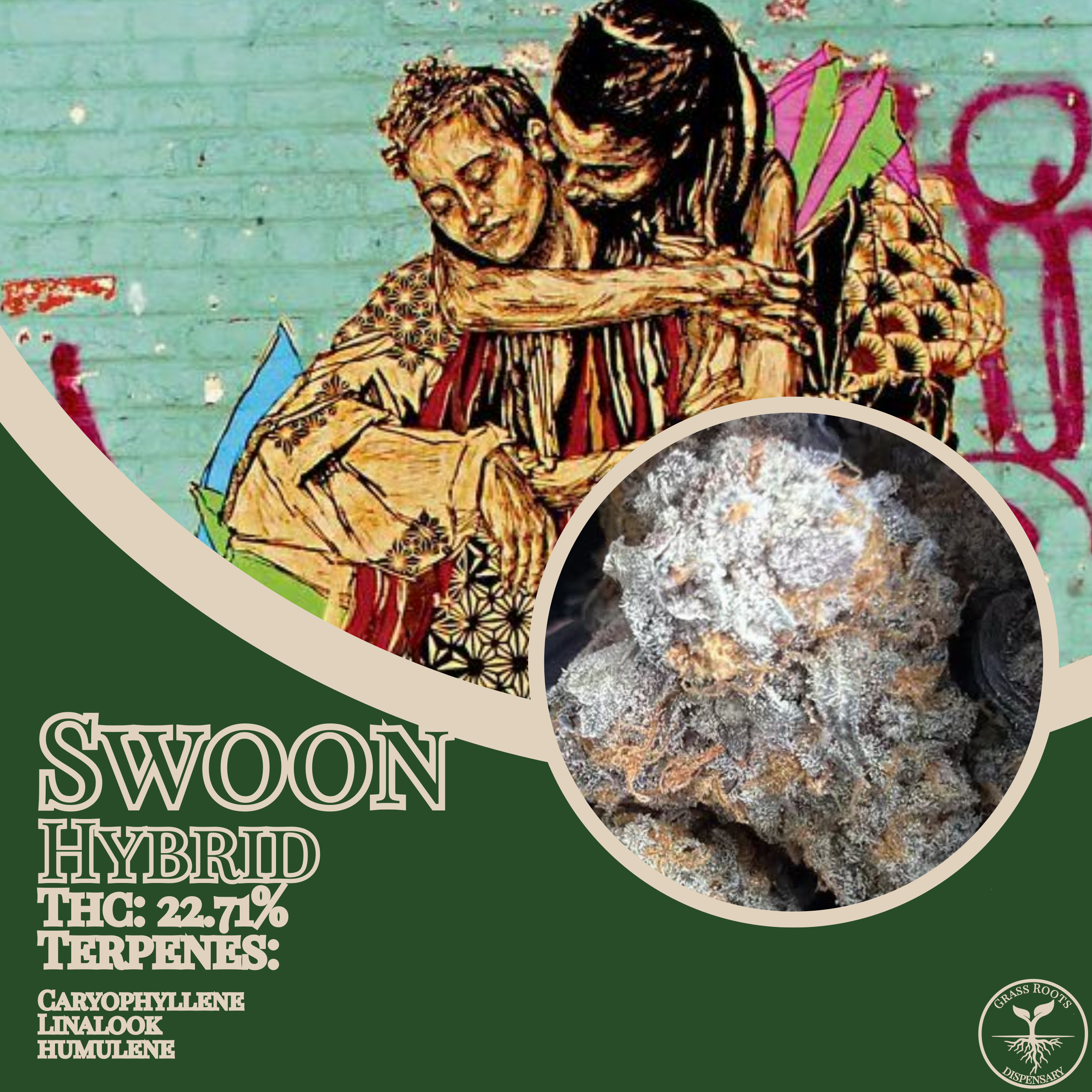
Swoon

Strain of the Week: Swoon

Swoon from Cresco brings together a three-part genetic lineage and a Kentucky batch profile worth looking at closely. At 22.71% THC, this week’s featured hybrid is led by caryophyllene, linalool, and humulene, creating an aromatic profile that moves between warm spice, softer floral character, and earthy, herbal depth.

Some strain names give you a pretty good idea of what to expect from the aroma. Swoon is not one of them — and that gives us a good reason to dig into the label.

From Cresco, this hybrid comes in at 22.71% THC with caryophyllene, linalool, and humulene among the leading terpenes in this Kentucky batch.

That combination creates an interesting aromatic structure. Caryophyllene brings warm pepper and spice, linalool introduces softer floral character, and humulene contributes earthy and herbal notes. It is a profile with contrast, and there is considerably more behind it once we look at the genetics.

Getting to Know Swoon

Swoon was bred in collaboration with Purple City Genetics and brings together three parent strains: F1 Durb, Gushers, and Street Guru.

Cresco’s broader description of the cultivar points toward warm sweetness, gas, floral character, and sugary notes. But individual batches can express different terpene profiles, which is why looking at the actual product information matters.

For this Kentucky batch, caryophyllene leads the way, while linalool and humulene give us two very different supporting aromatic families to explore.

Why Swoon Stands Out

The most interesting thing about this Swoon batch is how different aromatic families sit alongside one another.

Caryophyllene gives the profile its peppery and spicy backbone. Linalool moves toward softer floral territory, while humulene brings things back toward earth, herbs, and woody character.

That creates a useful contrast. Instead of three leading terpenes pointing in essentially the same aromatic direction, each one contributes something noticeably different.

It is also another reminder that the strain name and THC percentage are only the beginning. The details on the product label can give us a much better understanding of what makes a particular batch distinctive.

Terpene Profile

Caryophyllene

Caryophyllene leads this Swoon batch and establishes its warm, spicy side. This terpene is commonly associated with peppery, woody, and spicy aromas and is also naturally present in black pepper, cloves, and cinnamon. Its position near the top of the profile gives us an important clue about the aromatic structure of this particular flower.

Linalool

Linalool brings a very different aromatic family into the mix. Commonly associated with floral, botanical, and lightly sweet characteristics, linalool is also naturally present in lavender. Alongside caryophyllene, it creates a contrast between warm spice and softer floral notes.

Humulene

Humulene adds another layer with earthy, herbal, woody, and sometimes subtly spicy aromatic characteristics. It is also naturally present in hops and shares some structural similarities with caryophyllene. In Swoon, humulene helps deepen the profile and gives the floral character of linalool something earthier to sit against.

Flavor and Aroma

Swoon is generally described as having a layered aromatic profile built around warm sweetness, floral character, and deeper gas-like notes.

The Kentucky batch gives us additional detail. Caryophyllene provides warm pepper and spice, linalool brings a softer floral element, and humulene adds earthy and herbal depth.

Think warm spice, floral sweetness, earth, herbs, and deeper aromatic notes rather than one simple flavor category from beginning to end.

A Closer Look at the Profile

22.71% THC gives us one measurement for this batch of Swoon, but the terpene information adds considerably more detail.

Caryophyllene is the most prominent of the three terpenes we are highlighting, while linalool and humulene introduce floral and earthy dimensions around that spicy foundation.

There is another useful lesson here. General descriptions of Swoon frequently identify a different set of dominant terpenes. That does not make either profile wrong — cannabis chemistry can vary between harvests, cultivation environments, and individual batches.

For a patient looking at a particular product, the information attached to that actual batch is what deserves the closest attention.

What the Hybrid Label Tells Us

Swoon is classified as a hybrid, reflecting genetics that bring together multiple branches of the cannabis family tree.

But just like the words indica and sativa, “hybrid” is not a complete chemical description. It does not tell us how much THC is present, which terpenes lead the batch, or how those aromatic compounds are distributed.

Here, the rest of the label fills in those details: 22.71% THC with a profile highlighted by caryophyllene, linalool, and humulene.

The classification gives us a starting point. The product data gives us the details.

What Patients Can Learn From It

Swoon gives us a useful example of how much information can sit behind a single strain name.

  • Genetics can help explain where a cultivar comes from
  • THC percentage is only one part of the product profile
  • Different terpenes contribute different aromatic characteristics
  • Terpene profiles can vary between batches of the same cultivar
  • Batch-specific information provides important context beyond general strain descriptions

Why It Made the Cut at Grass Roots

Swoon made the cut because both the genetics and the batch-specific chemistry give us something worth exploring.

Its F1 Durb, Gushers, and Street Guru lineage gives the cultivar an interesting background, while this Cresco batch brings together caryophyllene, linalool, and humulene for a profile that moves through spice, florals, earth, and herbs.

It also gives us another real-world example of why we pay attention to the actual product information instead of relying exclusively on generic strain descriptions.

That is what Strain of the Week at Grass Roots Kentucky is for: helping medical cannabis patients look beyond the name and understand more of the information behind the product.

Explore Swoon

Want to learn more about this week’s featured strain? View Swoon from Cresco on the Grass Roots Kentucky medical cannabis menu for current product information.

View Swoon

Quick Strain Snapshot

  • Strain: Swoon
  • Grower: Cresco
  • Type: Hybrid
  • THC: 22.71%
  • Terpenes: Caryophyllene, Linalool, Humulene
  • Lineage: F1 Durb × Gushers × Street Guru
  • Aroma Notes: Warm spice, floral sweetness, earth, herbs, deeper gas-like notes

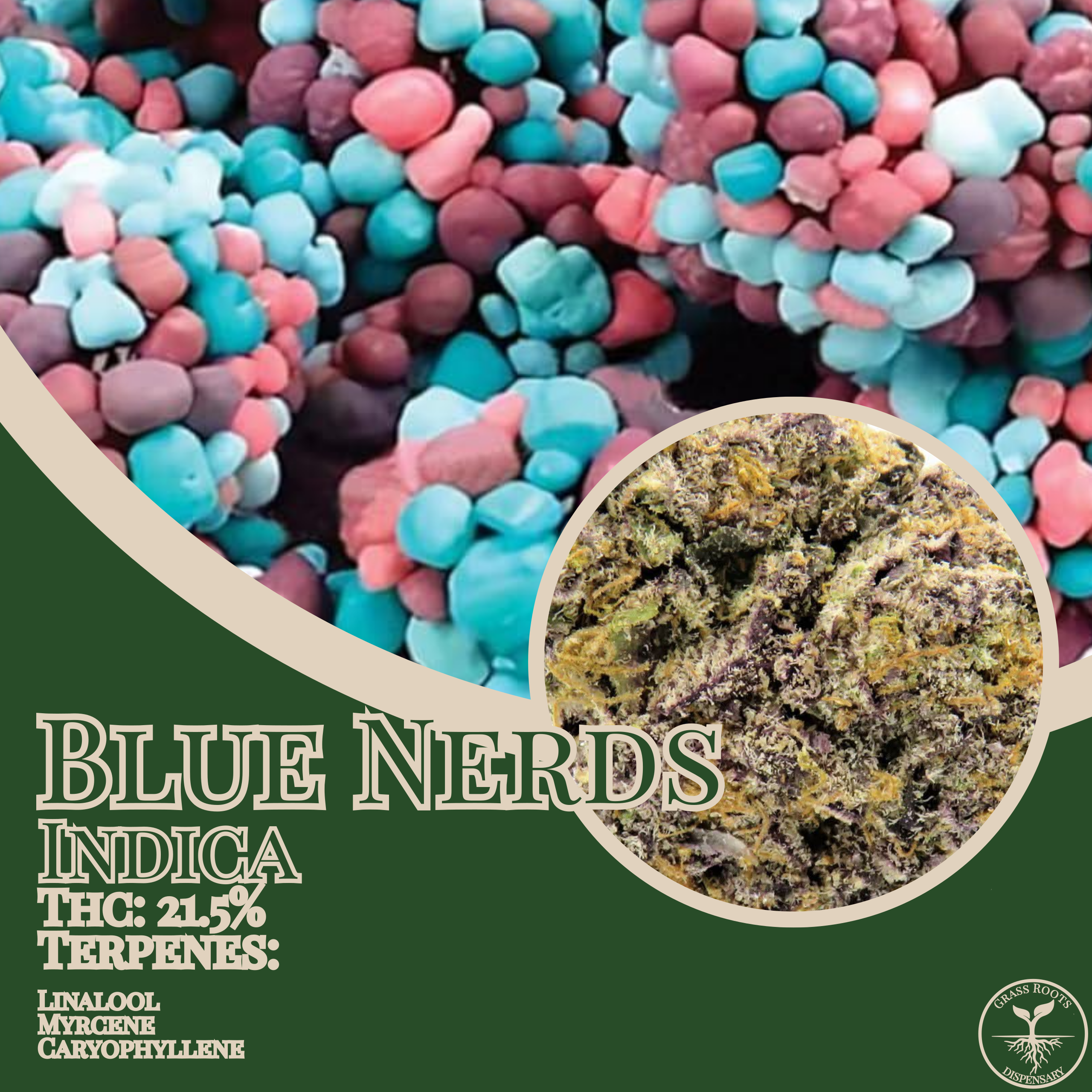
Blue Nerds

Strain of the Week: Blue Nerds

Blue Nerds from High Supply pairs a candy-inspired name with a terpene profile that has plenty of depth behind it. At 21.5% THC, this week’s featured indica is led by linalool, myrcene, and caryophyllene, creating an aromatic profile that moves between softer floral character, earthy herbs, and warm spice.

With a name like Blue Nerds, it is easy to expect a profile built entirely around bright fruit and candy-like sweetness. This particular High Supply batch gives us something more layered to talk about.

From High Supply, this indica comes in at 21.5% THC with linalool, myrcene, and caryophyllene leading the terpene profile.

That combination moves in several aromatic directions at once. Linalool contributes softer floral character, myrcene brings earth and herbs, and caryophyllene adds warm pepper and spice. Together, they give Blue Nerds more depth than its candy-inspired name might suggest.

Getting to Know Blue Nerds

Blue Nerds is a particularly interesting strain to research because the name does not point to one universally documented genetic line. Different versions of Blue Nerds have circulated with different reported parentage, making the name itself less useful for identifying a specific product than you might expect.

For this week’s feature, that makes the information from the actual High Supply product especially valuable. Rather than assuming genetics or chemistry based on a strain name, we can focus on what we know about this batch: its 21.5% THC content, indica classification, and terpene profile led by linalool, myrcene, and caryophyllene.

Why Blue Nerds Stands Out

The terpene order is one of the first things worth noticing about this Blue Nerds batch.

Linalool leads the profile, followed by myrcene and caryophyllene. That puts a terpene associated with floral and botanical aromas ahead of the earthier and spicier compounds in the top three.

It is a useful reminder that strain names can create expectations, but the actual product profile can tell a more detailed story. A candy-inspired name does not mean every prominent aromatic compound is going to fall neatly into a sweet or fruit-forward category.

This High Supply batch gives us floral, earthy, herbal, and spicy characteristics to explore — all from the three leading terpenes alone.

Terpene Profile

Linalool

Linalool leads this Blue Nerds batch and gives us a particularly interesting place to start. Commonly associated with floral, botanical, and lightly sweet aromas, linalool also occurs naturally in plants such as lavender. As the leading terpene here, it helps establish the softer aromatic side of the profile.

Myrcene

Myrcene brings considerably deeper aromatic territory. Commonly associated with earthy, herbal, and musky characteristics, myrcene can also be found naturally in plants including hops, thyme, and mango. Alongside linalool, it creates contrast between softer floral notes and a deeper herbal foundation.

Caryophyllene

Caryophyllene rounds out the top three with warmth and spice. It occurs naturally in plants and spices including black pepper, cloves, and cinnamon and is commonly associated with peppery, woody, and spicy aromatic characteristics. Here, it adds another layer beneath the floral and earthy elements already present.

Flavor and Aroma

Blue Nerds is generally associated with sweet and fruit-forward aromatic territory, with berry characteristics frequently appearing in descriptions of cultivars carrying the name.

But the actual terpene information from this High Supply batch adds more context. Leading linalool points toward softer floral character, myrcene contributes earth and herbs, and caryophyllene introduces peppery spice.

That makes this a profile worth thinking about in layers: sweet and fruit-associated characteristics around the strain name, with floral, earthy, herbal, and spicy aromatic compounds giving the specific batch additional depth.

A Closer Look at the Profile

21.5% THC gives us one measurement for this batch of Blue Nerds, but it does not tell us everything that makes the product distinctive.

The terpene lineup adds much more detail. Linalool leads with softer floral character, myrcene provides earthy and herbal depth, and caryophyllene brings warm spice.

The order matters, too. Looking only at a list of terpenes tells you which compounds are present, while knowing which ones lead the profile gives you additional information about the chemistry of that particular batch.

The more of the label you understand, the more useful information you have beyond THC percentage alone.

What the Indica Label Tells Us

High Supply classifies this Blue Nerds flower as an indica. That gives patients one piece of information about the product, but it should not be mistaken for a complete chemical description.

Terms such as indica, sativa, and hybrid are widely used to organize cannabis cultivars, while cannabinoid and terpene information provides another way to examine what is actually present in a specific batch.

In this case, we know the product is classified as an indica, contains 21.5% THC, and has a terpene profile led by linalool, myrcene, and caryophyllene.

Putting those pieces together gives us more information than relying on any single label by itself.

What Patients Can Learn From It

Blue Nerds gives us an especially useful lesson in why product-specific information matters.

  • One strain name can sometimes be associated with more than one reported genetic lineage
  • THC percentage is only one measurement on a medical cannabis label
  • Terpene order can provide additional context about a specific batch
  • Indica, sativa, and hybrid classifications do not describe the complete chemical profile
  • Batch-specific product information is more useful than assuming every product with the same strain name will be identical

Why It Made the Cut at Grass Roots

Blue Nerds made the cut because this is exactly the kind of strain that rewards looking beyond the name.

High Supply’s 21.5% THC batch gives us a terpene profile with clear contrast. Linalool leads with floral character, myrcene brings earthy and herbal depth, and caryophyllene finishes the top three with warm spice.

Even the uncertainty surrounding the broader Blue Nerds family becomes useful from an educational perspective. When the same strain name can appear alongside different reported genetics, the information attached to the actual product becomes even more important.

That is what Strain of the Week at Grass Roots Kentucky is for: taking a closer look at the information behind medical cannabis products and helping patients understand what those details actually mean.

Explore Blue Nerds

Want to learn more about this week’s featured strain? View Blue Nerds from High Supply on the Grass Roots Kentucky medical cannabis menu for current product information.

View Blue Nerds

Quick Strain Snapshot

  • Strain: Blue Nerds
  • Grower: High Supply
  • Type: Indica
  • THC: 21.5%
  • Terpenes: Linalool, Myrcene, Caryophyllene
  • Aroma Notes: Floral, earthy, herbal, warm spice, fruit-associated notes

Lemon Sportif

Strain of the Week: Lemon Sportif

Lemon Sportif from Cresco brings citrus-forward genetics together with a terpene profile that has more depth than its bright name might suggest. At 22.72% THC, this week’s featured flower pairs myrcene, caryophyllene, and linalool for an aromatic profile that moves between earthy herbs, warm spice, softer floral character, and the citrus influence found throughout its lineage.

With a name like Lemon Sportif, citrus is probably the first thing you expect. The genetics certainly support that idea, but the actual terpene profile of this Cresco batch adds several other layers worth exploring.

From Cresco, this sativa comes in at 22.72% THC with myrcene, caryophyllene, and linalool leading the terpene profile.

That combination is what makes Lemon Sportif interesting from an educational standpoint. Earthy and herbal character from myrcene meets the warm spice of caryophyllene and softer floral character of linalool, all against a genetic background built around bright citrus.

Getting to Know Lemon Sportif

Lemon Sportif was bred in collaboration with Purple City Genetics and is reported as a cross of (Lemon Tree × Skorange) × THC Bomb. That gives the cultivar a lineage with strong citrus influence while leaving plenty of room for other aromatic characteristics to emerge from the finished flower.

This particular Cresco batch gives us a great example of why the product label matters. General descriptions of a cultivar may point to one terpene combination, while an individual harvest can present something different. Here, myrcene, caryophyllene, and linalool are the three leading terpenes we are examining.

Why Lemon Sportif Stands Out

The most interesting thing about Lemon Sportif is the contrast between its citrus-heavy family tree and the leading terpenes found in this batch.

Myrcene brings earthy and herbal character, while caryophyllene adds peppery warmth and spice. Linalool takes the profile in another direction, contributing a softer floral quality.

That matters because a strain name, THC percentage, or sativa classification can only tell you so much. Two products with similar THC percentages can still have very different cannabinoid and terpene profiles.

Lemon Sportif gives Kentucky medical cannabis patients a useful example of why reading beyond the largest number on the label can reveal much more about a particular cultivar.

Terpene Profile

Myrcene

Myrcene gives Lemon Sportif an earthier side. Commonly associated with herbal, earthy, and musky aromas, myrcene is also naturally present in plants such as hops, thyme, and mango. Here, it provides a deeper foundation underneath the cultivar’s brighter citrus lineage.

Caryophyllene

Caryophyllene adds warmth and spice to the profile. This terpene is also naturally found in black pepper, cloves, and cinnamon, which helps explain the peppery and woody aromatic qualities commonly associated with it. In Lemon Sportif, it creates another layer of contrast against the brighter genetic background.

Linalool

Linalool rounds out the trio with softer floral and botanical character. It is also naturally present in lavender and contributes a very different aromatic dimension from either myrcene or caryophyllene. Together, the three make this batch more complex than the name “Lemon” alone would suggest.

Flavor and Aroma

Lemon Sportif comes from genetics known for pronounced citrus character, with descriptions of the cultivar commonly pointing toward lemon, citrus, and fuel-like aromatic notes.

This particular terpene lineup adds more depth to that foundation. Myrcene contributes earth and herbs, caryophyllene introduces warm pepper and spice, and linalool adds a softer floral edge.

Think bright citrus influence layered with earth, herbs, peppery spice, and subtle floral character rather than a one-dimensional lemon profile.

A Closer Look at the Profile

22.72% THC is one part of Lemon Sportif’s cannabinoid profile, but focusing exclusively on that percentage misses much of what makes this particular batch worth studying.

The three leading terpenes tell us considerably more about its aromatic structure. Myrcene establishes an earthy and herbal foundation, caryophyllene adds warm spice, and linalool introduces softer floral character.

It is also worth remembering that terpene profiles can vary from one harvest or batch to another. The profile printed on the product itself is more useful for understanding that specific flower than assuming every example of a named cultivar will be chemically identical.

That is why learning how to read the full product profile can be so valuable.

What the Sativa Label Tells Us

Lemon Sportif is classified as a sativa, but that category is best understood as one piece of information rather than a complete description of the cultivar.

Modern cannabis genetics are complex, and individual batches can vary in cannabinoid and terpene composition. Looking at the actual laboratory information alongside the cultivar’s genetics gives patients a more complete picture than relying on the sativa label alone.

The Lemon Sportif profile is a good example. Its three leading terpenes span earthy, herbal, spicy, and floral aromatic families.

The category gives you a starting point. The rest of the label helps fill in the details.

What Patients Can Learn From It

Lemon Sportif offers several useful lessons for patients who want to become more familiar with the information found on medical cannabis labels.

  • A strain name does not describe the entire terpene profile
  • THC percentage is only one measurement on the product label
  • Sativa, indica, and hybrid classifications provide limited information on their own
  • Terpene profiles can vary between batches of the same cultivar
  • Looking at cannabinoids, terpenes, genetics, and batch information together provides more context

Why It Made the Cut at Grass Roots

Lemon Sportif made the cut because there is more to examine here than a catchy name and a THC percentage.

Cresco’s 22.72% THC flower gives us a terpene lineup with real contrast. Myrcene brings earthy and herbal depth, caryophyllene contributes peppery spice, and linalool adds a softer floral dimension.

Pair that with a Purple City Genetics lineage built from Lemon Tree, Skorange, and THC Bomb, and Lemon Sportif becomes a great example of how genetics and the actual chemistry of a specific batch can tell different parts of the same story.

That is what Strain of the Week at Grass Roots Kentucky is for: helping medical cannabis patients understand not just the name on the package, but the information behind it.

Explore Lemon Sportif

Want to learn more about this week’s featured strain? View Lemon Sportif from Cresco on the Grass Roots Kentucky medical cannabis menu for current product information.

View Lemon Sportif

Quick Strain Snapshot

  • Strain: Lemon Sportif
  • Grower: Cresco
  • Type: Sativa
  • THC: 22.72%
  • Terpenes: Myrcene, Caryophyllene, Linalool
  • Lineage: (Lemon Tree × Skorange) × THC Bomb
  • Aroma Notes: Citrus, earth, herbs, peppery spice, subtle floral notes