A Kentucky medical cannabis label tells you far more than a strain name. This guide walks through each part of the label, from THC numbers to batch details, so you know what you are buying.
Grass Roots KY • Patient Education
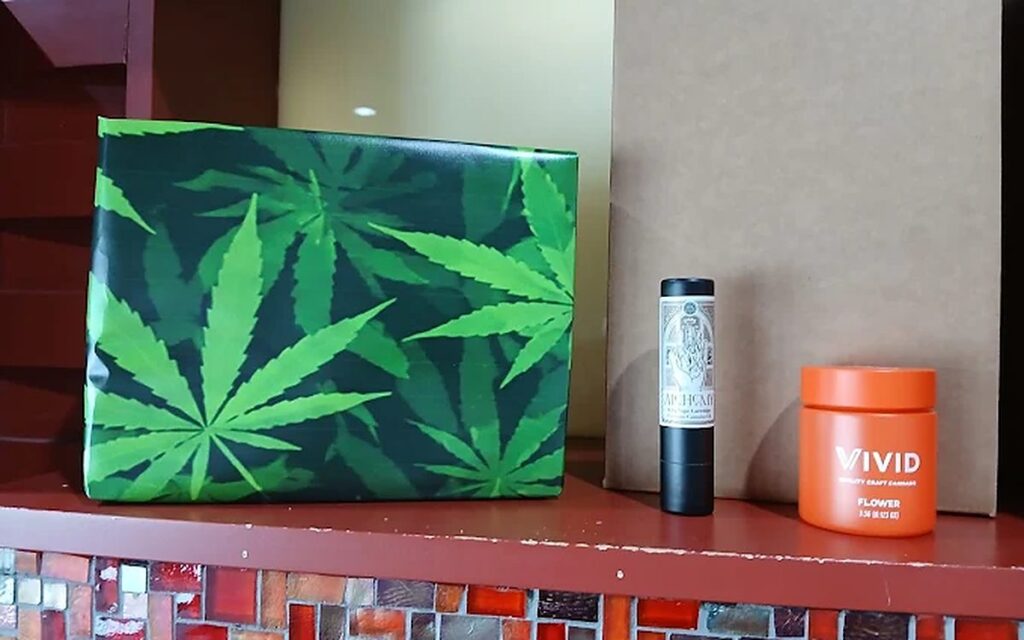
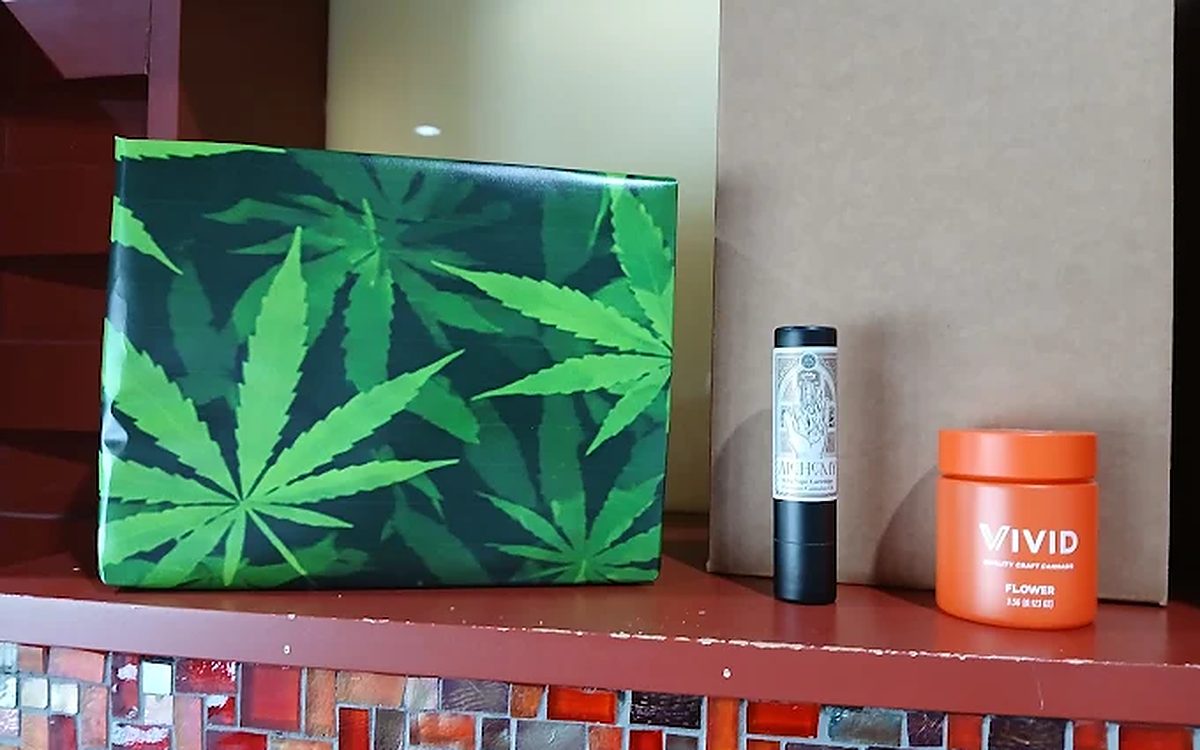
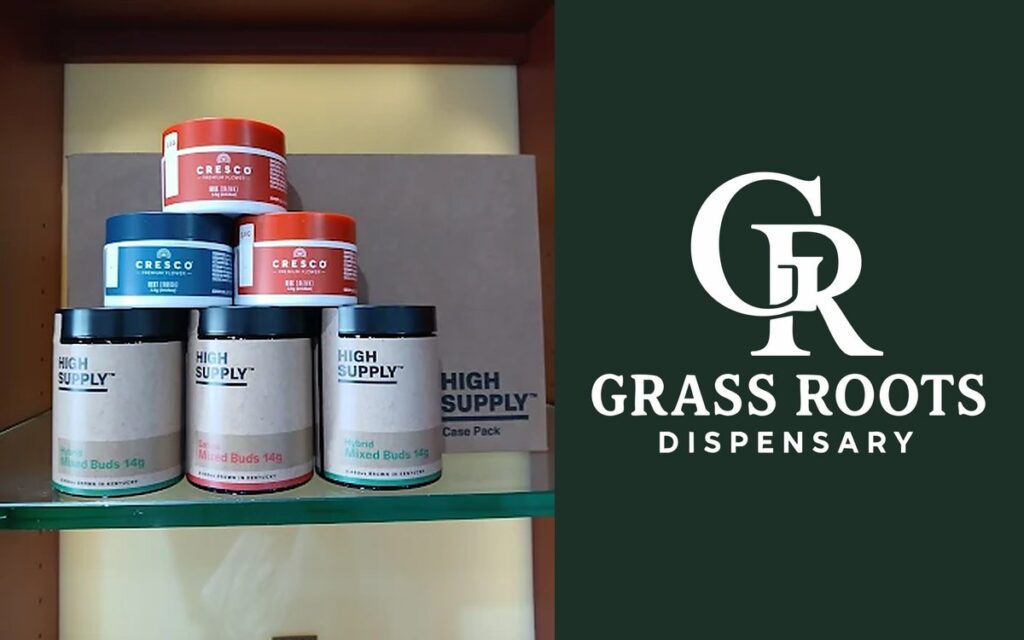
Packaged products on display at Grass Roots Dispensary in Mayfield.
Quick Answers
Every package must show the strain, the product form and also the THC and CBD content.
Flower labels list potency as a percentage, while edible labels list milligrams.
In addition, the label names the cultivator, the testing facility and the batch.
Then look for the expiration date, the state symbol and the required warnings.
Finally, some details may sit behind a QR code marked “Specific Product Information.”
What Every Kentucky Medical Cannabis Label Must Show
Kentucky’s packaging regulation, 915 KAR 1:100, sets the rules. As a result, labels look similar from one brand to the next.
Main parts of a Kentucky label
Label detail
What it tells you
Strain and type
The strain name and whether it is sativa, indica or hybrid
Product form and net weight
What the product is and how much the package holds
THC and CBD amounts
Potency figures from the batch’s certificate of analysis
Terpenes
The total terpene percentage and the most prevalent terpenes
Ingredients and allergens
Everything in the product, plus possible allergens
Grower, processor and lab
The licensed businesses that grew, made and tested the batch
Batch identifier and dates
The batch, plus its harvest, packaging, test and expiration dates
Dispensary sticker
The dispensary’s name, license number and phone number
Kentucky requires several warnings on every package. First, look for the state’s standardized medicinal cannabis symbol, which is navy blue. You will also find the statement “For medicinal use by cardholders only. KEEP OUT OF REACH OF CHILDREN.”
In addition, each package lists the typical time the product takes to work. It must also show the National Poison Control Center phone number and any possible allergens.
Flower carries one more warning: “NOT INTENDED FOR CONSUMPTION BY SMOKING.” Our guide on whether you can smoke flower explains that rule.
Terpenes, Batches and Test Dates
The middle of the label holds the details that set one batch apart from another, so it deserves a close look.
First, the terpene line lists the total terpene percentage and the most prevalent terpenes. Our Strain of the Week posts also show terpene profiles for featured strains.
Second, the batch identifier connects your package to a specific harvest or production run. Because a licensed safety compliance facility tests each batch, the THC and CBD figures come from that batch’s certificate of analysis.
Finally, compare the test date, the packaging date and the expiration date. Together, they tell you how fresh the product is.
What the QR Code on a Kentucky Medical Cannabis Label Does
Small packages leave little room for text. So, Kentucky lets a business move some details to a QR code. The code must sit next to the words “Specific Product Information,” and it must be large enough for a phone to scan.
Behind the code, you may find the names and license numbers of the cultivator, processor and packager. Likewise, the extraction method and the packaging date can appear there instead of on the label.
Packaging Rules That Protect Your Household
The package itself follows rules, too. First, it must be child-resistant, with at least two steps to open it the first time. It must also carry a tamper-evident seal. In addition, the package must be opaque, light-resistant and, when the product calls for it, resealable.
Kentucky also bans cartoons and designs that could appeal to children. Similarly, a package cannot imitate a familiar food or drink brand. Even so, keep every product in its original package and out of reach of children and pets.
Help Reading a Medical Cannabis Label at Grass Roots
Labels pack a lot into a small space, so questions are normal. At Grass Roots, our team can walk you through any label before you buy. However, we cannot give medical advice, so ask your practitioner about amounts and interactions.
New to shopping with us? Our guide to your first visit explains what happens at the counter.
Kentucky Medical Cannabis Label Questions
Why does a flower jar mention smoking?
Kentucky bans smoking medical cannabis. Therefore, the state requires the warning “NOT INTENDED FOR CONSUMPTION BY SMOKING” on raw plant material.
What is a certificate of analysis?
In short, it is the lab report for a batch. Because the label’s potency figures come from that report, the batch identifier matters.
Where do I find the expiration date?
Look on the label itself, because Kentucky’s regulation lists the expiration date among the details that must appear there.
Does the dispensary add anything to the label?
Yes. In addition to the producer’s label, each product carries a dispensary sticker with the dispensary’s name, license number and phone number.
Grass Roots Dispensary in Mayfield
See Labels in Person
Bring your card and a photo ID to 1220 Paris Rd. Our team can go over any label with you, every day from 10 AM to 6 PM.
Medical Cannabis in Mayfield, KY: A Local Patient’s Guide
New to medical cannabis in Mayfield, KY? Kentucky’s program is still young, so many people in Graves County share the same questions. This guide pulls the answers together in one place for patients across Western Kentucky.
Grass Roots KY • Patient Education
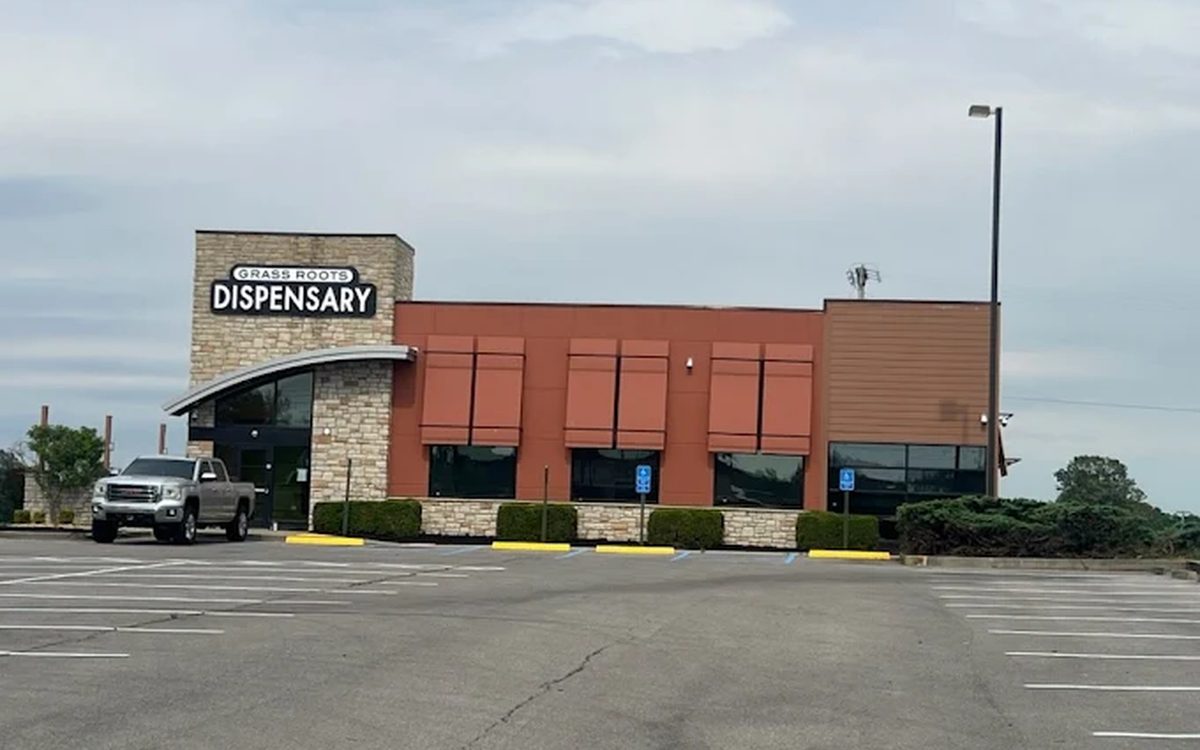
The Grass Roots Dispensary storefront at 1220 Paris Rd in Mayfield, Kentucky.
Quick Answers
Kentucky allows medical cannabis only for registered patients and caregivers who hold a state card.
To get a card, you need a qualifying condition, a practitioner’s written certification and a $25 application.
Our medical cannabis dispensary is at 1220 Paris Rd, Mayfield, KY 42066.
We are open every day from 10 AM to 6 PM, so call (270) 220-9099 with questions.
However, Kentucky does not allow smoking or home growing.
How Medical Cannabis Works in Mayfield, KY
Kentucky legalized medical cannabis under Senate Bill 47, and the Kentucky Office of Medical Cannabis now runs the program. In short, it works like this:
First, you need a qualifying medical condition and a written certification from an authorized practitioner.
Then you apply to the state for a registry identification card, which most people call a medical card. The state application fee is $25.
Finally, once the state approves you, you can buy medical cannabis only from a state-licensed dispensary like Grass Roots.
According to the state, it approves or denies a complete application within 30 days. After approval, the state issues the card within five days, and it stays valid for one year.
The same state rules apply in every Kentucky county. At first, the law listed six qualifying conditions, such as cancer, chronic pain, epilepsy, multiple sclerosis, chronic nausea and PTSD.
Then, in 2026, an executive order and a new state regulation named 15 more conditions. For example, the list now includes Parkinson’s disease, Crohn’s disease, fibromyalgia, glaucoma, sickle cell anemia and severe arthritis. We break down the full list in our guide to Kentucky’s qualifying conditions.
However, only a practitioner can decide whether you qualify. So, if you are not sure, that is the first conversation to have.
Getting Your Card, Step by Step
First, visit an authorized practitioner in person. The state keeps a directory of practitioners who can certify patients.
Then get your written certification. The practitioner records it with the state after your visit.
Next, apply to the state through the Kentucky Medical Cannabis Program website. You need your certification, your ID details, a notarized signature page and the $25 fee.
After that, the state reviews your application and issues your card.
Finally, visit a licensed dispensary with your card and a photo ID.
Medical Cannabis Products at Our Mayfield Dispensary
Kentucky allows several forms of medical cannabis. As a result, Grass Roots carries a range of products from Kentucky cultivators and processors, including:
Kentucky sets limits based on a 30-day supply. In other words, that is 112 grams of flower, 28 grams of concentrate, or 3,900 milligrams of THC in infused products. You can buy a 30-day supply during a given 25-day period.
First, bring your Kentucky medical cannabis card and a valid photo ID. Also, if you help someone as their registered caregiver, bring your caregiver card. Our post on what to expect on your first visit covers the rest.
Frequently Asked Questions
Is recreational cannabis legal in Mayfield, KY?
No. In fact, Kentucky allows only medical cannabis for registered patients and caregivers who hold a valid state card.
Can I use a medical card from another state at Grass Roots?
Yes, if you are a visiting patient who is 21 or older. Bring your valid home-state card, a second government-issued photo ID and documentation of a qualifying diagnosis. You can also apply to Kentucky for a visiting patient card.
Where is the Grass Roots medical cannabis dispensary in Mayfield, KY?
We are at 1220 Paris Rd, Mayfield, KY 42066, on KY-121 near Lowe’s. If you have any questions, call (270) 220-9099.
1220 Paris Rd, Mayfield, KY
Ready to Visit Grass Roots?
Looking for medical cannabis in Mayfield, KY? Check the menu before you come, and then bring your card and a photo ID. We are open every day from 10 AM to 6 PM.
Edibles: What Kentucky Medical Cannabis Patients Should Know
Gummies are only one type of edible. Learn how different food-based products and concentrated oral preparations compare, what THC milligrams mean on a label, why timing varies, and what Kentucky medical cannabis patients should know about safety.
Image by UnifiedFunctionality, via Wikimedia Commons, licensed under CC BY-SA 4.0. This is an illustrative product from outside Kentucky, not a representation of Grass Roots KY inventory. View the original image and license.
When people hear the word edibles, they often think of gummies. But medical cannabis products come in different forms, and the differences involve more than appearance or packaging.
Gummies, chocolates, baked goods, and certain drink products are examples of food-based edible formats. Concentrated preparations, including some products packaged in oral syringes, have different characteristics and must be understood according to their own labels and directions.
Understanding these distinctions can help patients interpret product information more accurately. THC content, formulation, serving information, onset, duration, and individual response all contribute to the bigger picture.
Edibles: The Quick Snapshot
Edibles include food-based products such as gummies, chocolates, baked goods, and certain drink products.
RSO is a concentrated extract; the specific product's label determines its intended use.
THC per serving and total THC per package are different measurements.
Products taken orally may take time to produce noticeable effects, and timing varies.
Different formulations are not automatically interchangeable.
Careful label reading and secure storage are important parts of patient safety.
1. What Are Edibles?
Edibles are food products formulated to contain cannabinoids, such as THC and sometimes CBD. Depending on the product and applicable Kentucky requirements, examples can include gummies, chocolates, baked goods, and drink powders.
Kentucky's Medical Cannabis Program distinguishes food-based edibles from other ingestible products in its patient storage guide. The guide identifies edibles as food items that can include gummies, baked goods, chocolates, and drink powders. It separately describes ingestibles that may include lozenges, sublingual tinctures, pills, oral syringes, and pastes.
These categories are useful because a product's packaging does not necessarily tell you how it is intended to be used.
Remember: Food-based edibles and other products administered orally are related categories, but they are not automatically the same thing. Always refer to the individual product's label and directions.
The format can influence ingredients, labeling, storage needs, and how a product is formulated. Here is what patients should understand about several common examples.
A. Gummies and Chewable Edibles
Gummies are chewable food products formulated with specified amounts of cannabinoids. They are one familiar example of an edible and a format patients may encounter when reviewing Kentucky medical cannabis products.
Different gummies can have different ingredients, cannabinoid content, serving sizes, and package configurations. Two products that look similar do not necessarily contain the same amount of THC or CBD.
What to look for on the label
THC and CBD amounts per serving, where applicable.
Total THC and CBD amounts per package.
The number of servings in the package.
Ingredients and possible allergens.
Product directions, warnings, and storage instructions.
Reading the label provides more useful information than relying on the product's appearance, flavor, or brand name alone.
B. Baked Goods and Chocolate
Image: Chocolate brownie, via Wikimedia Commons. The photograph is available under a public-domain dedication. This is a regular brownie used for illustration, not a cannabis-infused product. View image source.
Brownies, cookies, and chocolates are familiar examples of food formats that can be formulated with cannabinoids. Kentucky's official edible-labeling guide uses a chocolate bar as an example when demonstrating serving information, cannabinoid amounts, ingredients, and possible allergens.
Ingredients and formulation can influence how cannabinoids are delivered and absorbed, but the appearance or composition of a food cannot reliably predict an individual's response.
Commercially prepared medical cannabis products should be evaluated using their own labels and directions. An ordinary baked good does not become a consistently measured medical cannabis product simply because a concentrate is added to it.
Label-reading tip: Check the stated cannabinoid amounts, serving information, ingredients, and allergen disclosures. Do not estimate cannabinoid content from the size or appearance of a food item.
C. Beverages and Drink Powders
Cannabinoid beverages and drink powders are additional formats patients may hear about. Depending on the product and applicable state requirements, a drink product may be formulated differently from a solid edible.
Some formulations are designed to disperse cannabinoids differently in a liquid. These differences may influence absorption characteristics, but they do not establish a universal onset time.
Being a liquid does not guarantee that a product will take effect immediately or faster than every gummy or other edible. Formulation, ingredients, product instructions, and individual response all matter.
Important context: Beverages are included here as an educational example, not as a statement that Grass Roots KY currently carries them or that every beverage product is authorized under Kentucky's medical cannabis program.
D. RSO and Concentrated Preparations
RSO stands for Rick Simpson Oil, a concentrated cannabis extract commonly associated with a thick, dark oil. Some products are packaged in syringes designed to dispense the concentrate.
RSO differs from a ready-made gummy or baked good in its formulation and concentration. A syringe describes the packaging; it does not, by itself, establish the intended route of administration.
Kentucky's patient storage guide lists oral syringes among examples of ingestible products. However, that general category does not establish the intended use of every syringe product. The particular product's label and directions are the relevant source.
What patients should understand
Concentrated extracts may have a different cannabinoid concentration from ready-made edible foods.
Read the specific product's label for cannabinoid content and directions.
Do not assume a product is intended to be swallowed or mixed into food unless its labeling and directions support that use.
Do not assume that serving or timing information for one product applies to every RSO preparation.
Patients with questions about the intended use of a particular product should consult its instructions and an appropriate healthcare professional.
E. Capsules, Pills, and Other Ingestibles
Some medical cannabis products intended to be swallowed come in capsule or pill form. Others may be formulated as tinctures, lozenges, pastes, or similar preparations.
These products are not all food-based edibles. Their formulations, directions, and absorption characteristics can differ.
The broader lesson is that appearance alone does not tell you how a medical cannabis product should be used. Follow the specific product's directions and check the label for information relevant to that formulation.
3. Comparing Different Product Formats
These formats differ in more than appearance. This table summarizes what patients should pay attention to when reviewing product information.
A syringe is packaging, not proof of the intended route of administration.
Capsules and other ingestibles
Formulation, cannabinoid amounts, specific instructions
Not every product taken orally is a food-based edible.
Baked goods, beverages, and capsules are educational examples here and are not statements about Grass Roots KY's current inventory.
4. Why Edibles and Oral Products Can Work Differently
When THC is swallowed, the body processes it differently than when it enters the bloodstream by other routes. The product passes through the digestive system, where cannabinoids are absorbed. THC is then metabolized by the liver, which converts some of it into other compounds, including 11-hydroxy-THC.
This metabolic process contributes to differences that may occur with ingested THC. Effects may take longer to become noticeable, and the experience can last for several hours.
These differences do not mean every edible produces the same experience. Product formulation, cannabinoid content, food intake, individual metabolism, and other factors can influence the outcome.
Key point: A gummy, beverage, baked good, and concentrated preparation may differ in formulation and absorption. There is no single timeline that reliably describes every product or every patient.
5. Onset, Peak Effects, and Duration of Edibles
Three terms help explain why the timing of an edible's effects can differ from what someone expects.
Onset
The time it takes for effects to begin becoming noticeable.
Peak effects
The period when effects may be strongest.
Duration
How long effects may continue.
A simplified timeline
Product used
→
Onset
→
Peak effects
→
Duration
This diagram explains the concepts, not a guaranteed schedule. Timing varies by product and individual.
Kentucky's official edible-labeling guide includes an estimated time-to-effect field. Its sample label states that an edible may take up to 120 minutes for an effect. That is an example of label information, not a guarantee that every product will act within that period.
Some products may take longer to produce noticeable effects, and effects may continue for hours. Formulation, food intake, individual metabolism, and other factors can influence timing.
Important safety reminder: Not noticing an effect immediately does not establish that a product has had no effect. Follow the product's directions and your healthcare professional's guidance. Do not take additional amounts based on the assumption that a product is not working.
6. Milligrams vs. THC Percentage: Understanding an Edible Label
Patients may be familiar with THC percentages when reviewing flower products. For medical cannabis intended for oral consumption as an edible, oil, or tincture, Kentucky's labeling regulation requires potency information in milligrams per serving and per package for total THC and total CBD, as applicable.
Milligrams and percentages describe different things. A percentage expresses concentration, while a milligram amount describes a specific quantity of a cannabinoid.
Illustrative label example
Hypothetical Edible Package
Total THC per package100 mg
Number of servings10
THC per serving10 mg
This is a simplified educational example, not an actual product label or a recommendation about how much a patient should consume.
Total THC per package: the stated THC amount across the entire package.
Number of servings: how many labeled servings the package contains.
THC per serving: the stated THC amount in an individual serving.
Kentucky's labeling regulation states that the THC amount per serving for covered products intended for oral consumption as an edible, oil, or tincture must not exceed 10 milligrams per serving. The total package amount and the amount in one serving are different measurements.
THC is not the only cannabinoid that may appear on a medical cannabis label. Some products contain THC alone, while others may contain CBD or a combination of cannabinoids.
When reviewing a product, look for the stated THC and CBD amounts, serving information, and additional details provided on the label or through approved product-information resources.
It is important not to assume that a particular THC-to-CBD ratio is best for every patient. CBD should also not be treated as a guarantee that THC-related impairment or unwanted effects will not occur.
A label provides information about a product. It cannot predict exactly how an individual will respond.
8. Why the Same Product Can Affect People Differently
Even when two people use the same product, their responses may differ. Several factors can influence the timing and intensity of effects.
Individual metabolism: People process cannabinoids at different rates.
Food intake: Whether and when someone has eaten may influence absorption.
Product formulation: Ingredients and formulation can influence how cannabinoids are delivered and absorbed.
Cannabinoid content: THC and CBD amounts contribute to the product's chemical profile.
Individual sensitivity: People may respond differently to the same amount.
Medications and health factors: Other medications or medical conditions may be relevant to safety and potential interactions.
These differences are why another person's experience cannot reliably predict yours. Patients should discuss their medical needs, current medications, and possible interactions with an appropriate healthcare professional.
9. Common Myths About Edibles: Fact or Fiction?
Myth: All edibles work the same way.
Fact: Product formulations differ, and timing and individual response can vary.
Myth: Beverages always take effect faster than gummies.
Fact: Some beverage formulations are designed to influence cannabinoid dispersion or absorption, but being a liquid does not guarantee faster effects.
Myth: An RSO syringe is just a gummy in a different package.
Fact: RSO is a concentrated extract. Its formulation and intended use should be established from the specific product's label and directions.
Myth: If I don't notice anything right away, the product isn't working.
Fact: Products taken orally can take time to produce noticeable effects. Not noticing an immediate effect does not establish that the product has had no effect.
Myth: CBD guarantees that THC won't cause unwanted effects.
Fact: CBD should not be treated as a guarantee against THC-related impairment or other adverse effects.
10. Potential Unwanted Effects and Safety Considerations
THC-containing edibles and other oral products can cause unwanted effects. Depending on the product and individual, these may include:
Anxiety or panic.
Confusion or difficulty concentrating.
Dizziness or drowsiness.
Impaired attention, judgment, or coordination.
An unexpectedly intense or prolonged experience.
Because effects may take time to become noticeable and can persist for hours, patients should follow the specific product's directions and their healthcare professional's guidance.
When to seek help
Do not drive or operate machinery while impaired. If someone experiences severe symptoms or you are concerned about a possible ingestion or adverse reaction, seek appropriate medical assistance.
For a suspected ingestion by a child, contact Kentucky Poison Control at 800-222-1222. For a pet, contact a veterinarian or the Animal Poison Control Center at 888-426-4435.
11. Safe Storage of Edibles: Protecting Children and Pets
Edibles may resemble ordinary foods, candies, or beverages. This makes secure storage especially important. A child or pet may not recognize that a product contains medical cannabis.
Keep medical cannabis products in their original child-resistant packaging.
Reseal packages after use.
Follow the storage instructions on the label, including any refrigeration requirements.
Store products where children and pets cannot see or reach them.
Keep products separate from ordinary food and clearly identifiable as medical products.
Do not leave products unattended on counters, tables, in bags, or in other accessible places.
12. How to Read a Kentucky Medical Cannabis Edible Label
Kentucky has specific labeling requirements for medical cannabis products. For products intended for oral consumption as an edible, oil, or tincture, the applicable regulation addresses cannabinoid potency per serving and per package, serving counts, nutrition information, and other product details.
Depending on the product category and applicable labeling requirements, information may include:
Label detail
Why it matters
THC and CBD amounts
Shows stated cannabinoid content, including per-serving and per-package amounts where applicable.
Serving count
Helps distinguish the amount in one serving from the total amount in the package.
Ingredients and allergens
Helps identify ingredients and potential allergens.
Directions and estimated onset
Provides product-specific directions and an estimate of how long effects may take to become noticeable.
Batch and testing information
Helps identify the particular production batch and related testing information.
Expiration and storage
Helps patients follow storage directions and the labeled shelf life.
Labels can differ by product category, and some permitted details may be provided through a QR code. Patients should review the actual package and any linked product information rather than relying on a generic example.
13. What Kentucky Patients Should Remember About Edibles
Edibles include food-based products such as gummies, chocolates, baked goods, and certain drink products.
RSO and other concentrated preparations are not automatically interchangeable with ready-made edible foods.
A syringe's packaging does not, by itself, establish the product's intended route of administration.
THC milligrams and THC percentages describe different measurements.
THC per serving and total THC per package are not the same amount.
The timing and duration of effects can vary by formulation and individual.
Follow the product's directions and your healthcare professional's guidance.
Do not drive or operate machinery while impaired.
Keep medical cannabis products securely stored away from children and pets.
Continue Exploring
Explore Edibles at Grass Roots KY
Understanding product formats, cannabinoid content, and label information is an important part of medical cannabis education. Explore our edibles category to review the products listed there and their available product information.
32% THC — But What Does That Number Actually Tell Us?
When comparing medical cannabis flower, it's easy to focus on one number: THC percentage. A product labeled 32% THC can certainly attract attention, but that number doesn't tell you everything about its chemical profile, how your body may respond, or whether it is the right fit for your individual needs.
Let's look at what THC percentage actually measures, what it leaves out, and why understanding the complete product profile is more informative than choosing by the highest number alone.
THC stands for delta-9-tetrahydrocannabinol, a cannabinoid found in cannabis. It is one of the primary compounds responsible for the plant's intoxicating effects.
When a flower label lists a THC percentage, that figure represents the measured or calculated concentration of THC in the product, as reported under the applicable testing and labeling conventions.
In general, a higher percentage means a greater concentration of THC relative to the amount of product being measured.
Here's the important distinction: THC percentage describes concentration. It does not, by itself, predict the exact effects a particular patient will experience.
That distinction is the foundation for understanding why the highest number on the label isn't necessarily the most useful way to compare products.
A THC Percentage Is Not a Prediction
Imagine two medical cannabis flower products:
Product A
32% THC
A higher reported THC concentration.
Product B
22% THC
A lower reported THC concentration.
The percentage tells us that Product A has a higher THC concentration. It does not establish that every patient will find Product A more beneficial, more comfortable, or better suited to their medical needs.
We can compare the numbers without assuming we can predict the entire experience.
What THC Percentage Doesn't Tell You
THC percentage is useful information. The problem is treating it as the only information that matters.
1. It Doesn't Describe the Entire Cannabinoid Profile
THC is not the only cannabinoid found in cannabis. Depending on the cultivar and product, a laboratory report may also list CBD and other cannabinoids, including CBG and CBC.
These compounds are not interchangeable, and their presence does not guarantee a particular therapeutic outcome. Looking at the broader cannabinoid profile simply provides more information than THC percentage alone.
2. It Doesn't Tell You the Terpene Profile
Terpenes are aromatic compounds found in cannabis and many other plants. They contribute to a product's aroma and flavor, and laboratory reports may identify compounds such as myrcene, limonene, caryophyllene, pinene, and linalool.
Researchers are studying how cannabis chemistry relates to people's reported experiences. However, evidence is still developing, and a terpene's presence should not be treated as a guarantee of a specific effect.
A terpene profile can help describe a product more completely, but it is not a reliable stand-alone promise of how a patient will respond.
3. It Doesn't Predict Your Individual Response
People can respond differently to the same product. Factors such as individual sensitivity, prior cannabis exposure, health conditions, other medications, and the way a product is administered can influence the experience and its risks.
A percentage printed on a package cannot account for every individual difference. That is why a patient's medical history and discussion with an authorized healthcare practitioner matter when evaluating medical cannabis.
A certificate of analysis can contain more information than a single potency figure, including cannabinoid results and other testing categories.
View the educational source at Trulieve.
Why Look Beyond THC Percentage at All?
Because cannabis is a complex plant, and a single number cannot describe every chemical feature of a product.
Two flower samples can have similar THC percentages but different cannabinoid and terpene profiles. Those differences help distinguish one sample's chemical composition from another's.
A 2021 study examining more than 800 commercial cannabis varieties found relationships between reported chemical profiles, flavors, and subjective-effect descriptions. The findings illustrate the complexity of cannabis profiles, but they do not establish that a particular terpene or strain label will reliably produce a specific medical effect.
Other research has found that pleasant aroma may be associated with positive subjective experiences, while THC potency alone did not predict pleasant subjective effects in the study examined. This is an evolving research area, not a formula for predicting an individual patient's response.
Concentration describes how much of a compound is present relative to the amount of product measured.
Dose refers to the amount of a compound a person actually receives. The dose can depend on the amount of product involved, how it is administered, and how much of the compound reaches the body.
Therefore, a higher THC percentage does not, by itself, tell you the exact dose a patient receives or the degree of effect they will experience.
Remember: THC percentage is a concentration measurement, not an individualized dosing recommendation.
Patients should follow their authorized practitioner's guidance and the directions provided with their medical cannabis products rather than using the highest available percentage as a substitute for individualized medical advice.
A Higher THC Percentage Can Also Mean Greater Risk
Looking beyond the percentage is not only about understanding differences between products. It is also about recognizing that THC can cause unwanted effects.
Depending on the individual and the amount received, THC may contribute to anxiety, panic, confusion, impaired attention, or problems with coordination and reaction time. Higher exposure can increase the risk of unwanted effects, although an individual's response cannot be predicted from percentage alone.
These risks are one reason patients should discuss product selection and potential side effects with an authorized healthcare practitioner, especially if they are new to medical cannabis, have experienced unwanted effects before, or take other medications.
Medical cannabis is not risk-free. Patients should follow their product directions, avoid driving or operating machinery when impaired, and seek medical guidance if they have concerns about how a product affects them.
What Should Patients Look at Besides THC Percentage?
THC is one useful data point. A more complete understanding comes from looking at several pieces of information together.
Cannabinoid Profile
Look at THC, CBD, and any other cannabinoids reported on the product's label or laboratory report.
Terpene Profile
When available, terpene results provide additional information about a sample's aromatic chemistry.
Product Type
Flower, concentrate, and other product forms differ in composition and how they are administered.
Testing Information
Review available testing information and product labeling rather than relying on a headline number alone.
Your Medical Needs
Health history, other medications, sensitivity, and treatment goals should be part of the conversation with your healthcare practitioner.
Your Previous Experience
Your documented responses and any unwanted effects are important information to share with your authorized practitioner.
What About Indica, Sativa, and Hybrid?
Labels such as indica, sativa, and hybrid are widely used to describe cannabis products, but they are not precise, standardized predictors of an individual's response.
Modern commercial varieties can have complex genetic backgrounds, and their chemical profiles can vary. Research has questioned how reliably these familiar labels reflect a product's actual chemistry or its effects.
These labels may be part of a product's description, but they are best considered alongside the cannabinoid profile, available terpene information, product details, and your own medical needs—not as a guarantee of how you will feel.
The goal is to understand the product and make informed, medically appropriate decisions with guidance from your authorized healthcare practitioner.
A 32% THC label tells you something important about concentration. It doesn't tell you everything about the product, and it cannot guarantee that the product is the right fit for every patient.
Have Questions About Your Medical Cannabis?
Talk with your authorized healthcare practitioner about your treatment goals, other medications, potential side effects, and questions about product composition.
For Kentucky program information, use the official Kentucky Office of Medical Cannabis resources.
THC percentage: Measures concentration, not a guaranteed individual response.
Cannabinoids: THC is one part of a broader chemical profile.
Terpenes: Provide information about aromatic chemistry, but do not guarantee a particular effect.
Individual differences: Health history, sensitivity, other medications, and prior experience can matter.
Product labels: Consider the complete available profile rather than a single percentage.
Medical guidance: Discuss product selection and potential risks with an authorized healthcare practitioner.
Educational Notice: This article is for general educational purposes and is not medical or legal advice. Research into cannabis chemistry and individual responses continues to develop. Kentucky Medical Cannabis Program requirements may change. Patients should follow current program rules and product directions and consult an authorized healthcare practitioner about their individual medical needs.
Keep Learning With Grass Roots
These related guides explain more about Kentucky's medical cannabis program.
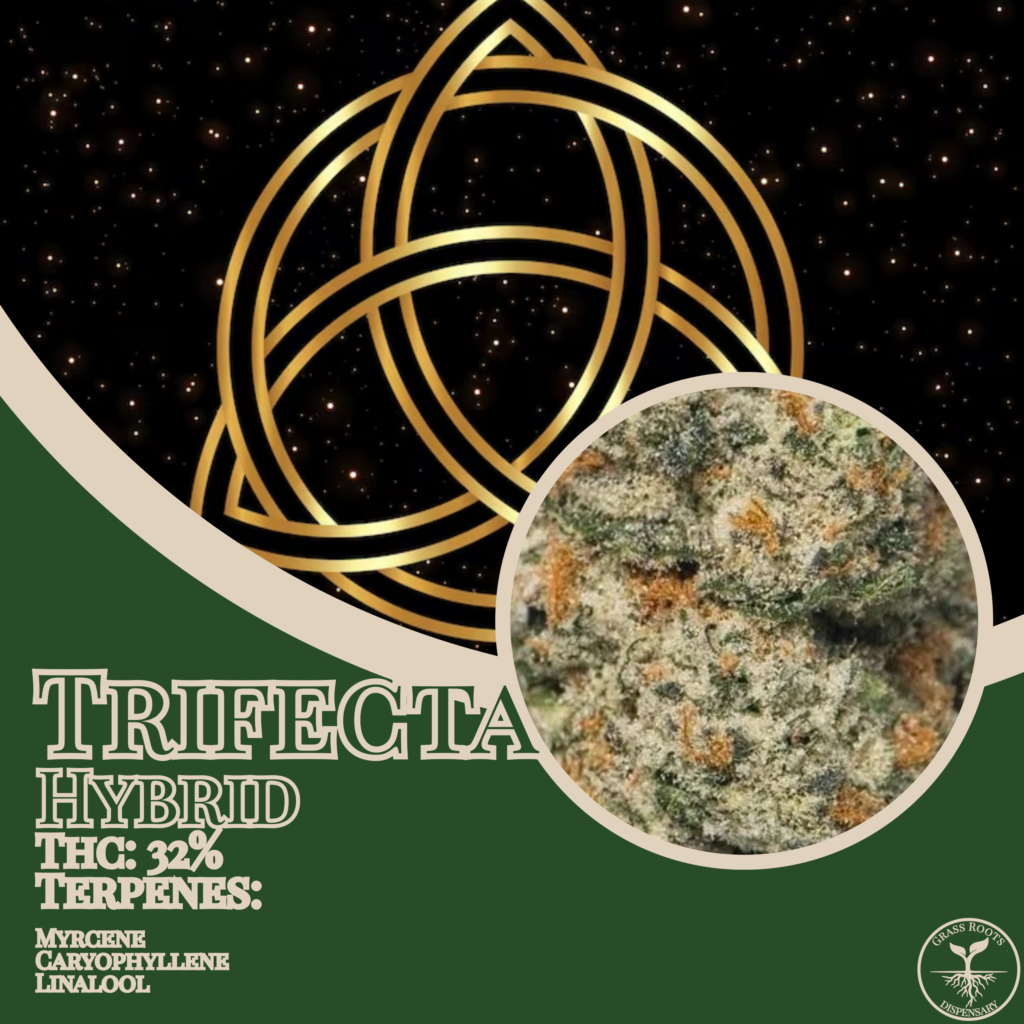
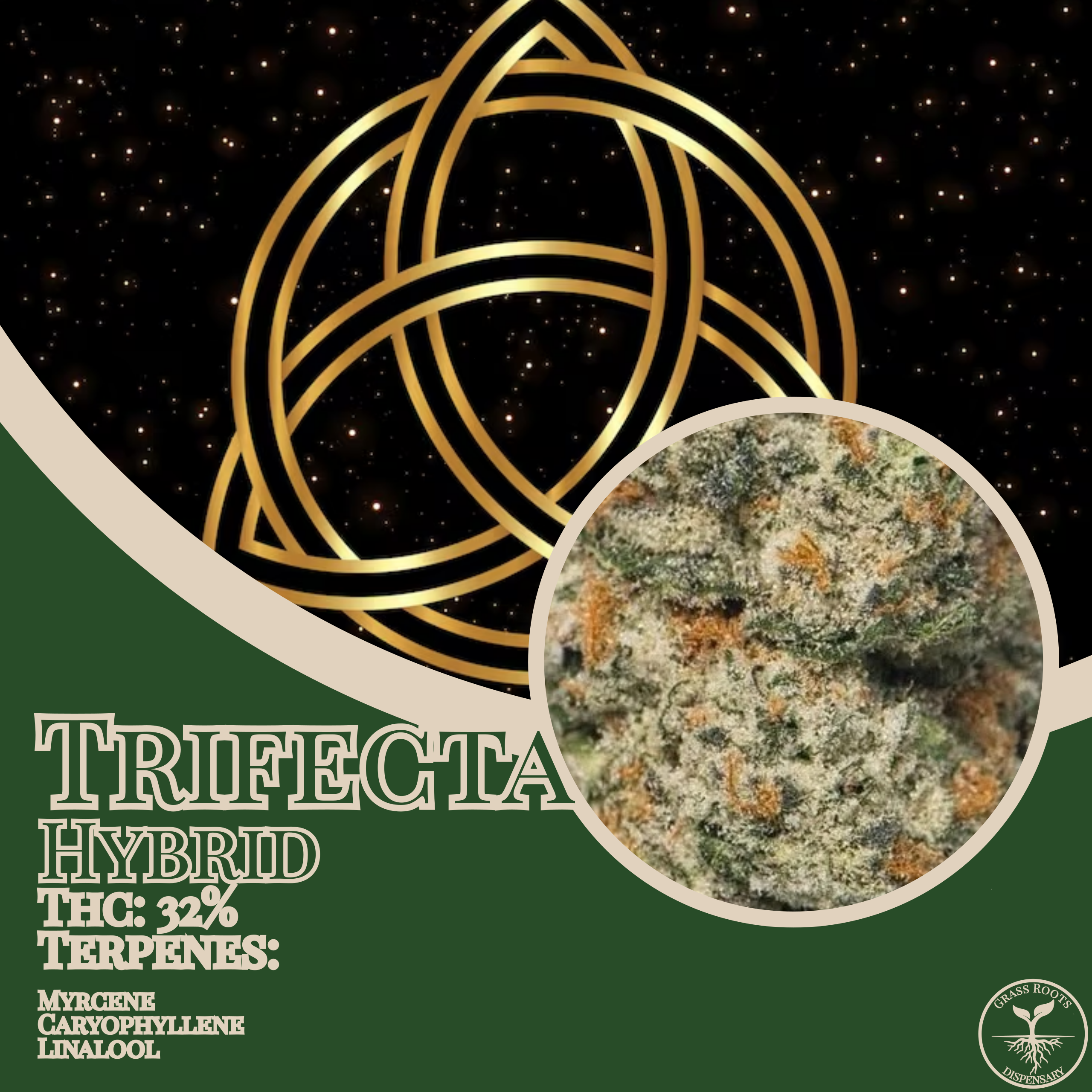
Trifecta from Dark Horse brings a fitting name to this week’s Strain of the Week. At 32% THC, this Kentucky hybrid is led by a three-part terpene lineup of myrcene, caryophyllene, and linalool, bringing together earthy herbs, warm spice, and softer floral character in one batch-specific profile.
With a name like Trifecta, three seems like the right place to start.
This Dark Horse hybrid comes in at 32% THC, with three leading terpenes that each bring a different aromatic family to the profile: myrcene, caryophyllene, and linalool.
Myrcene moves toward earth and herbs. Caryophyllene introduces warm pepper and spice. Linalool adds a softer floral and botanical layer.
That gives us a true terpene trifecta to explore — and another useful example of why the biggest number on a cannabis label is only one part of the story.
Getting to Know Trifecta
Researching a strain usually begins with its name and genetics. With Trifecta, that requires a little more care.
The name “Trifecta” has been attached to more than one cannabis cultivar over the years, and publicly available genetic descriptions are not consistent enough to confidently assign one of those lineages to this specific Dark Horse Kentucky product.
So instead of guessing, we can focus on what we actually know about the product in front of us: it is a Dark Horse hybrid at 32% THC, with myrcene, caryophyllene, and linalool leading the terpene profile.
Sometimes good cannabis education means knowing when the available information supports an answer — and when it doesn’t.
Why Trifecta Stands Out
The first thing likely to catch attention on this Trifecta batch is its 32% THC. It is a prominent number, but it is not the only useful information on the product.
The terpene lineup gives us another layer to examine.
Myrcene, caryophyllene, and linalool do not all point in the same aromatic direction. Instead, they move across earthy and herbal, peppery and spicy, and floral and botanical territory.
That contrast is what makes this profile especially useful for Strain of the Week. We can take one product and see how several pieces of label information work together rather than treating THC percentage as a complete description.
For patients learning how to read medical cannabis labels, Trifecta gives us plenty to talk about.
Trifecta Terpene Profile
Myrcene
Myrcene leads this Trifecta batch. It is commonly associated with earthy, herbal, and musky aromatic characteristics and also occurs naturally in plants such as hops, thyme, and mango. In a profile with deeper gas-forward characteristics, myrcene can help reinforce that earthy and herbal foundation.
Caryophyllene
Caryophyllene adds warmth and spice. Commonly associated with peppery, woody, and spicy aromatic characteristics, it is also naturally present in black pepper, cloves, and cinnamon. Here, it gives the profile a sharper aromatic counterpoint to myrcene’s earthier character.
Linalool
Linalool takes the profile in yet another direction. Known for floral, botanical, and lightly sweet aromatic characteristics, linalool is also naturally present in lavender. Its presence is especially interesting alongside myrcene and caryophyllene because it introduces a softer aromatic layer against all that earth and spice.
Trifecta Flavor and Aroma
Dark Horse Trifecta has been described in Kentucky product information as having a rich, gas-forward aromatic profile with creamy and floral undertones and citrus character.
The leading terpenes help us understand some of the layers sitting underneath that description.
Myrcene brings earth and herbs. Caryophyllene contributes warm pepper and spice. Linalool provides the clearest connection to the softer floral side of the profile.
Taken together, think deep earthy and herbal character, warm spice, florals, and brighter accents around a richer aromatic foundation.
A Closer Look at the Profile
At 32% THC, potency is an obvious part of this Trifecta batch’s label. But a percentage alone cannot tell us everything about a cannabis product.
The terpene profile gives us information about aromatic composition that THC percentage simply does not provide.
In Trifecta, the three terpenes we are highlighting cover distinctly different aromatic territory. Myrcene is earthy and herbal. Caryophyllene is warm and spicy. Linalool is floral and botanical.
Looking at those details alongside the cannabinoid information gives patients a more complete picture of the product label than focusing on THC alone.
What the Hybrid Label Tells Us
Trifecta is classified as a hybrid. That gives us a broad category, but it does not tell us the product’s complete chemical or aromatic profile.
A hybrid label does not tell us that this batch contains 32% THC. It does not tell us that myrcene leads the terpene profile. And it does not reveal the combination of earthy, spicy, and floral aromatic characteristics represented by its leading terpenes.
Those details come from looking deeper into the actual product information.
The hybrid classification is one piece of the puzzle. Cannabinoid and terpene information adds more pieces around it.
What Patients Can Learn From It
Trifecta gives us several useful lessons about evaluating medical cannabis product information.
A high THC percentage is still only one measurement on the label
Terpenes can add important information about a product’s aromatic profile
Hybrid is a broad classification rather than a complete chemical description
The same strain name can sometimes be associated with different reported genetics
When genetic information cannot be confidently verified for a specific product, it is better to acknowledge the uncertainty than fill in the gap
Batch-specific information is especially useful when comparing general strain descriptions with an actual product
```
Why It Made the Cut at Grass Roots
Trifecta made the cut because this batch gives us an unusually clear opportunity to talk about the information patients see first — and the information worth looking for next.
The 32% THC figure stands out immediately. But look a little deeper and we find a three-part terpene profile that moves through earth, herbs, spice, and florals.
There is also a lesson in the cultivar name itself. Because multiple genetic descriptions exist for strains called Trifecta and we could not confidently connect one of them to this specific Dark Horse flower, the responsible approach is to focus on the product information we can verify.
That is exactly what Strain of the Week at Grass Roots Kentucky is here to do: look beyond the headline numbers and help medical cannabis patients better understand the information behind the product.
Explore Trifecta
Want to learn more about this week’s featured strain? View Trifecta from Dark Horse on the Grass Roots Kentucky medical cannabis menu for current product information.
Resin vs. Rosin: What Kentucky Medical Cannabis Patients Should Know
Resin and rosin may differ by only one letter, but when those words appear on a medical cannabis label, they can describe very different concentrates. The biggest distinction comes down to how each is produced — and understanding that difference can make concentrate labels much easier to read. This guide breaks down resin vs. rosin for Kentucky patients.
If you've looked at medical cannabis concentrates, you've probably encountered words like resin, live resin, rosin, and live rosin.
Because the names are so similar, it is easy to assume they are interchangeable.
They aren't.
In the simplest terms, resin concentrates are generally produced using an extraction solvent, while rosin is produced mechanically without an extraction solvent. That difference in processing is the foundation for understanding the two categories.
Resin vs. Rosin: The Quick Answer
RESIN
Cannabis compounds are separated from plant material through an extraction process that generally uses a solvent. Live resin typically starts with fresh-frozen cannabis.
ROSIN
Cannabis compounds are separated mechanically using heat and pressure rather than an extraction solvent. Live rosin generally begins with fresh-frozen material that is processed into hash before pressing.
What Is Resin?
The word resin actually starts with the cannabis plant itself.
Cannabis flowers contain microscopic structures called trichomes. These glandular structures contain many of the cannabinoids and terpenes associated with the plant.
When you see "resin" used as the name of a concentrate, however, it generally refers to cannabinoids and other compounds that have been separated from plant material through a solvent-based extraction process.
The exact processing method varies by product and manufacturer, which is one reason reading the product label and testing information is more useful than judging a concentrate by its appearance alone.
Example of a cannabis concentrate produced through solvent extraction.
Image via Wikimedia Commons; released into the public domain by its creator.
View image source.
What Makes Live Resin "Live"?
The word live describes the starting material rather than suggesting that anything in the finished concentrate is literally alive.
Live resin generally begins with cannabis that is harvested and frozen rather than first going through the traditional drying and curing process.
Why does that matter?
Terpenes are volatile aromatic compounds. The handling of cannabis after harvest can influence how much of that original aromatic profile remains by the time extraction begins.
Freezing freshly harvested material is intended to preserve more of those volatile compounds before extraction, which is why the term "live" appears so frequently on terpene-focused concentrate products.
"Solventless" describes the extraction method. It should not automatically be interpreted as meaning that every rosin product is stronger, more effective, or universally "better" than every resin product. They are different approaches to producing a concentrate.
This is where the terminology starts to make more sense.
Live rosin combines the fresh-frozen starting material associated with "live" concentrates with a solventless production process.
Freshly harvested cannabis is frozen to help preserve its original chemical and aromatic profile. The trichomes can then be mechanically separated from the plant material to create hash, which becomes the starting material for rosin production.
The important distinction is still the same: live resin and live rosin may both begin with fresh-frozen cannabis, but they take different paths during extraction.
Close-up view of cannabis trichomes. Photo by Psychonaught via Wikimedia Commons; released into the public domain.
View original image.
Resin vs. Rosin Side by Side
Feature
Resin
Rosin
Extraction
Solvent-based
Solventless
Primary Method
Extraction followed by solvent removal
Heat and pressure
"Live" Version
Live Resin
Live Rosin
Live Starting Material
Fresh-frozen cannabis
Fresh-frozen cannabis, commonly processed into hash first
What the Name Tells You
How the extract was generally produced
That the extract was produced without an extraction solvent
Is Rosin Better Than Resin?
Not necessarily.
"Solventless" is sometimes treated as another word for "better," but that oversimplifies what these labels actually tell you.
Extraction method is only one part of a concentrate's story. Starting material, cannabinoid profile, terpene composition, processing, testing, storage, and the individual patient's needs can all matter.
A better question for a Kentucky medical cannabis patient is not simply, "Which one is best?" It is, "What does this label tell me about this specific product?"
What Kentucky Patients Should Know About Concentrates
Kentucky regulates medical cannabis concentrates and the businesses that manufacture them.
Under Kentucky's Medical Cannabis Program, licensed processors are authorized to process raw plant material into medical cannabis products through extraction and other approved processing methods.
Kentucky also establishes potency and supply limits for concentrates. Finished concentrates intended for sale to registered cardholders cannot exceed 70% THC potency.
For standard supply calculations, Kentucky currently defines a 30-day supply of concentrates as 28 grams and a 10-day supply as 9.5 grams, unless an authorized medical cannabis practitioner adjusts a patient's permitted amount as allowed by the program.
Those rules are one reason it is important to think of concentrates as their own medical cannabis product category rather than simply another version of raw plant material.
Knowing whether something is resin or rosin is useful, but that one word doesn't tell you everything about a medical cannabis product.
When comparing concentrate labels, pay attention to information such as:
Cannabinoid content
THC and CBD percentages
Terpene information when provided
Product type
Processor or producer
Testing information
Package directions and warnings
Two concentrates with similar THC percentages can still have very different chemical profiles. Understanding the terminology gives you another piece of information to discuss with your authorized medical cannabis practitioner and dispensary staff.
The Easiest Way to Remember Resin vs. Rosin
Resin uses extraction solvents.
Rosin is solventless and relies on heat and pressure.
And when you see the word "live," think about the starting material: freshly harvested cannabis preserved by freezing before processing.
Want to Learn More About Resin vs. Rosin?
Understanding concentrate terminology gets easier once you understand how the different categories are produced. These resources provide additional background on resin, rosin, and Kentucky's medical cannabis program.
Resin: Generally produced through solvent-based extraction
Rosin: Produced without extraction solvents using heat and pressure
Live Resin: Solvent-based concentrate made from fresh-frozen cannabis
Live Rosin: Solventless concentrate made using fresh-frozen starting material
"Live": Refers to how the starting cannabis is preserved before processing
Kentucky concentrate limit: Finished concentrates may not exceed 70% THC
Standard Kentucky 30-day concentrate supply: 28 grams
Educational Notice: This article is provided for general educational purposes and is not medical or legal advice. Kentucky Medical Cannabis Program requirements may change. Registered patients should follow product labeling, current Kentucky Medical Cannabis Program requirements, and guidance from their authorized medical cannabis practitioner.
Keep Learning With Grass Roots
These related guides explain more about Kentucky's medical cannabis program.
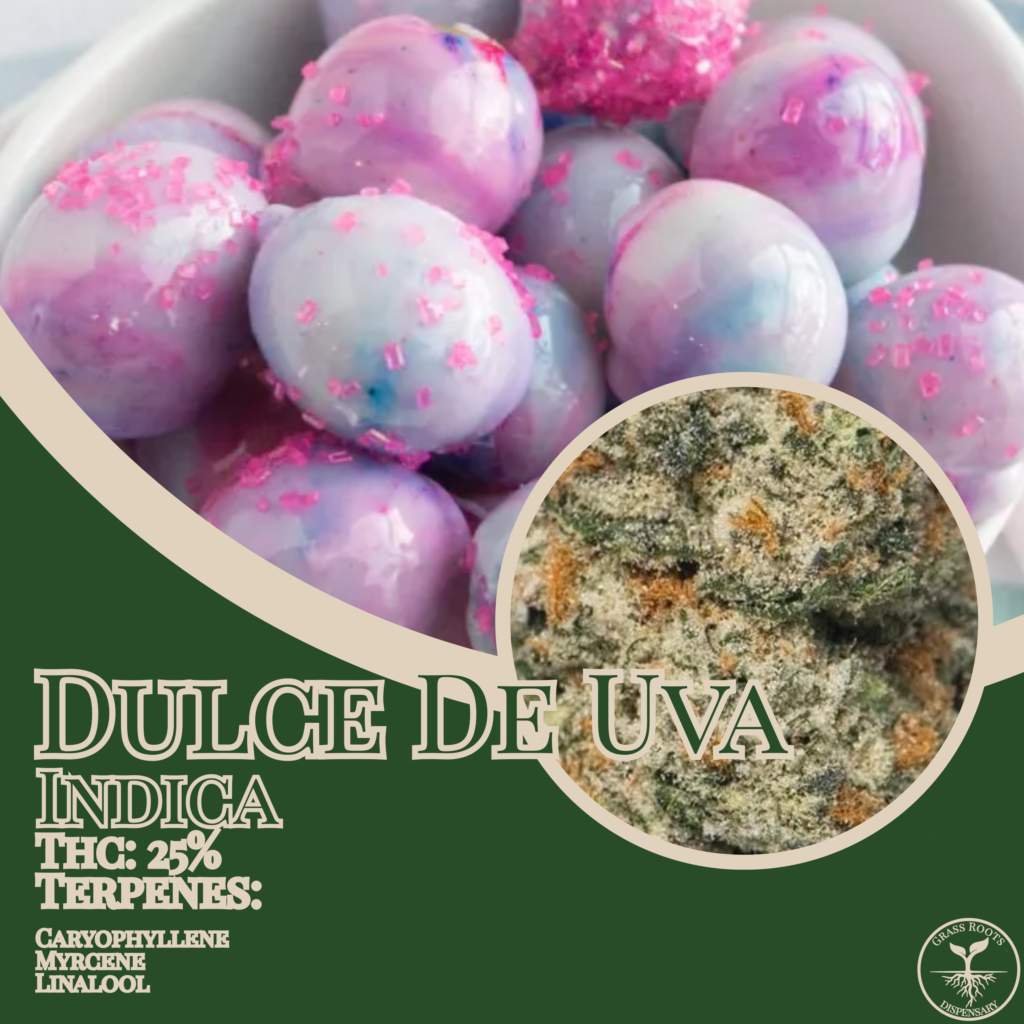
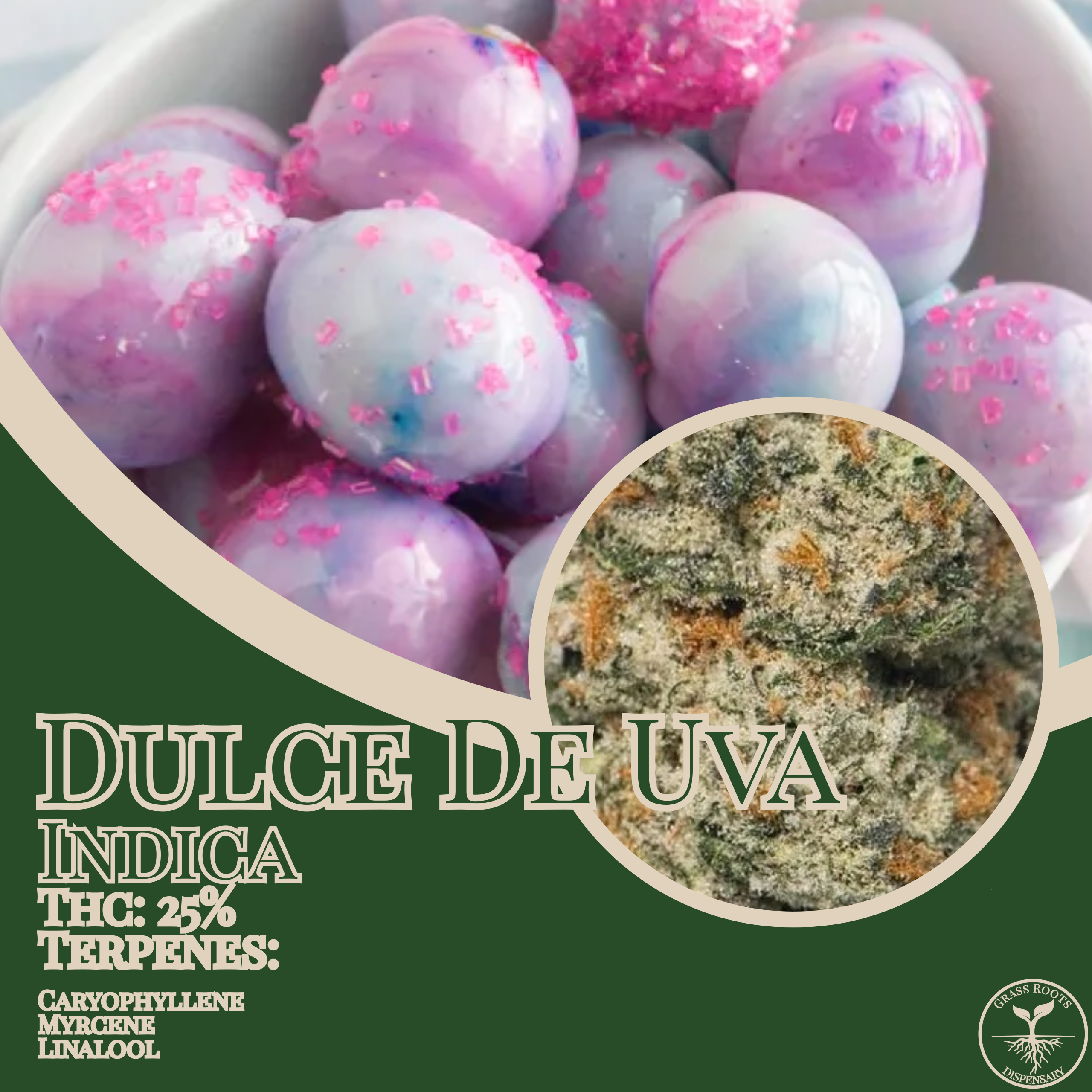
Dulce De Uva from VIVID brings grape-inspired genetics together with a Kentucky batch profile worth exploring beyond the name. At 25% THC, this week’s featured indica is led by caryophyllene, linalool, and myrcene, creating an aromatic combination that moves through warm spice, softer floral notes, earth, and herbs beneath the cultivar’s sweeter grape-forward identity.
Some strain names make you curious. Dulce De Uva practically tells you where to start.
The name translates roughly to “sweet grape,” and grape-inspired character is central to this cultivar’s identity. VIVID identifies Dulce De Uva as a cross of Grape Pie × OG Kush, bringing together fruit-forward genetics with the earthy depth associated with the OG side of its family tree.
For this Kentucky product, however, the most useful information comes from the actual batch in front of us: 25% THC, an indica classification, and caryophyllene, linalool, and myrcene leading the terpene profile.
Those three terpenes add considerably more detail to the story behind the name.
Getting to Know Dulce De Uva
VIVID lists Dulce De Uva’s genetics as Grape Pie × OG Kush.
It is an interesting pairing. Grape Pie brings a name and genetic background closely associated with sweet, fruit-forward character, while OG Kush is one of the better-known names in modern cannabis genetics and is frequently associated with earthier, deeper aromatic characteristics.
Together, they give Dulce De Uva a foundation that can move between grape and berry sweetness, earth, deeper aromatic notes, and dessert-like character.
The Kentucky batch adds its own fingerprint to that foundation, with caryophyllene, linalool, and myrcene forming the leading terpene trio.
Why Dulce De Uva Stands Out
Dulce De Uva gives us a great example of how genetics and batch-specific chemistry can tell different parts of the same story.
The genetics help explain the cultivar’s grape-inspired identity. The terpene profile tells us more about this particular Kentucky product.
Caryophyllene introduces warm pepper and spice. Linalool moves toward softer floral and botanical territory. Myrcene adds earth, herbs, and musk.
That means the aromatic picture is more complex than “sweet grape.” There are several contrasting aromatic families sitting underneath the fruit-forward identity suggested by the name.
And that is exactly why a strain name should be the beginning of the conversation rather than the end of it.
Dulce De Uva Terpene Profile
Caryophyllene
Caryophyllene leads this batch and brings warm, peppery, and spicy aromatic characteristics into the profile. This terpene is also naturally present in black pepper, cloves, and cinnamon. Against a grape-inspired genetic background, caryophyllene gives the sweeter side of the cultivar a noticeably spicier counterpoint.
Linalool
Linalool introduces another aromatic direction entirely. Commonly associated with floral, botanical, and lightly sweet characteristics, it is also naturally present in lavender. In this terpene trio, linalool sits between the warm spice of caryophyllene and the earthier character of myrcene.
Myrcene
Myrcene brings earthy, herbal, and musky aromatic characteristics to the profile. It also occurs naturally in plants including hops, thyme, and mango. Alongside caryophyllene and linalool, it helps give this batch a deeper foundation beneath its fruit-inspired identity.
Dulce De Uva Flavor and Aroma
The name Dulce De Uva points directly toward sweetness and grape, and VIVID’s description of the cultivar follows that same general direction with grape, berry, earthy, sweet, and deeper aromatic characteristics.
But the Kentucky terpene data lets us build a more detailed picture.
Caryophyllene suggests warm spice and pepper. Linalool adds floral softness. Myrcene brings earth and herbs. Layer those characteristics beneath grape and berry-inspired genetics and the result is a much broader aromatic profile than the name alone might suggest.
Think sweet grape and berry character surrounded by warm spice, florals, earth, herbs, and deeper notes.
A Closer Look at the Profile
25% THC is one of the easiest numbers to spot on this product, but it is only one measurement.
The terpene information gives us another way to understand the batch. Rather than three closely related aromatic compounds, its leading trio moves across several different categories: spice from caryophyllene, florals from linalool, and earthy herbs from myrcene.
That matters because THC percentage alone does not describe a product’s complete chemical profile, genetics, or aromatic composition.
For Kentucky medical cannabis patients learning how to read product information, Dulce De Uva is another good reminder to look at the whole label instead of stopping at the largest number.
What the Indica Label Tells Us
This Kentucky Dulce De Uva product is classified as an indica. That gives us one piece of information about how the product is categorized, but the label does not tell the whole story by itself.
In fact, VIVID’s broader genetics library categorizes Dulce De Uva as a hybrid. Differences like this are a useful reminder that indica, sativa, and hybrid labels are broad classifications and can vary between product listings and markets.
For this specific Kentucky product, we can be more precise about what is actually listed: 25% THC with caryophyllene, linalool, and myrcene leading the terpene profile.
The classification gives us a starting point. Batch-specific cannabinoid and terpene information gives us additional detail.
What Patients Can Learn From It
Dulce De Uva gives us several useful lessons about reading medical cannabis product information.
A strain name can hint at aromatic character without describing the complete product
Genetics can provide context for where a cultivar comes from
Indica, sativa, and hybrid are broad classifications rather than complete chemical descriptions
THC percentage represents only one measurement
Terpene information can reveal aromatic characteristics that are not obvious from the strain name
Batch-specific product information deserves close attention because individual products can differ from generic cultivar descriptions
Why It Made the Cut at Grass Roots
Dulce De Uva made the cut because there is more going on here than a memorable name.
The Grape Pie × OG Kush genetics give us a clear genetic foundation to explore, while this Kentucky batch’s caryophyllene, linalool, and myrcene profile adds warm spice, florals, earth, and herbs around that grape-forward identity.
It is also a particularly useful example of why we separate general strain information from the details attached to an actual product. VIVID’s broader cultivar information gives us context, but the Kentucky label tells us what is specific to this batch.
That is what Strain of the Week at Grass Roots Kentucky is all about: helping medical cannabis patients understand the information behind the name, one cultivar at a time.
Explore Dulce De Uva
Want to learn more about this week’s featured strain? View Dulce De Uva from VIVID on the Grass Roots Kentucky medical cannabis menu for current product information.
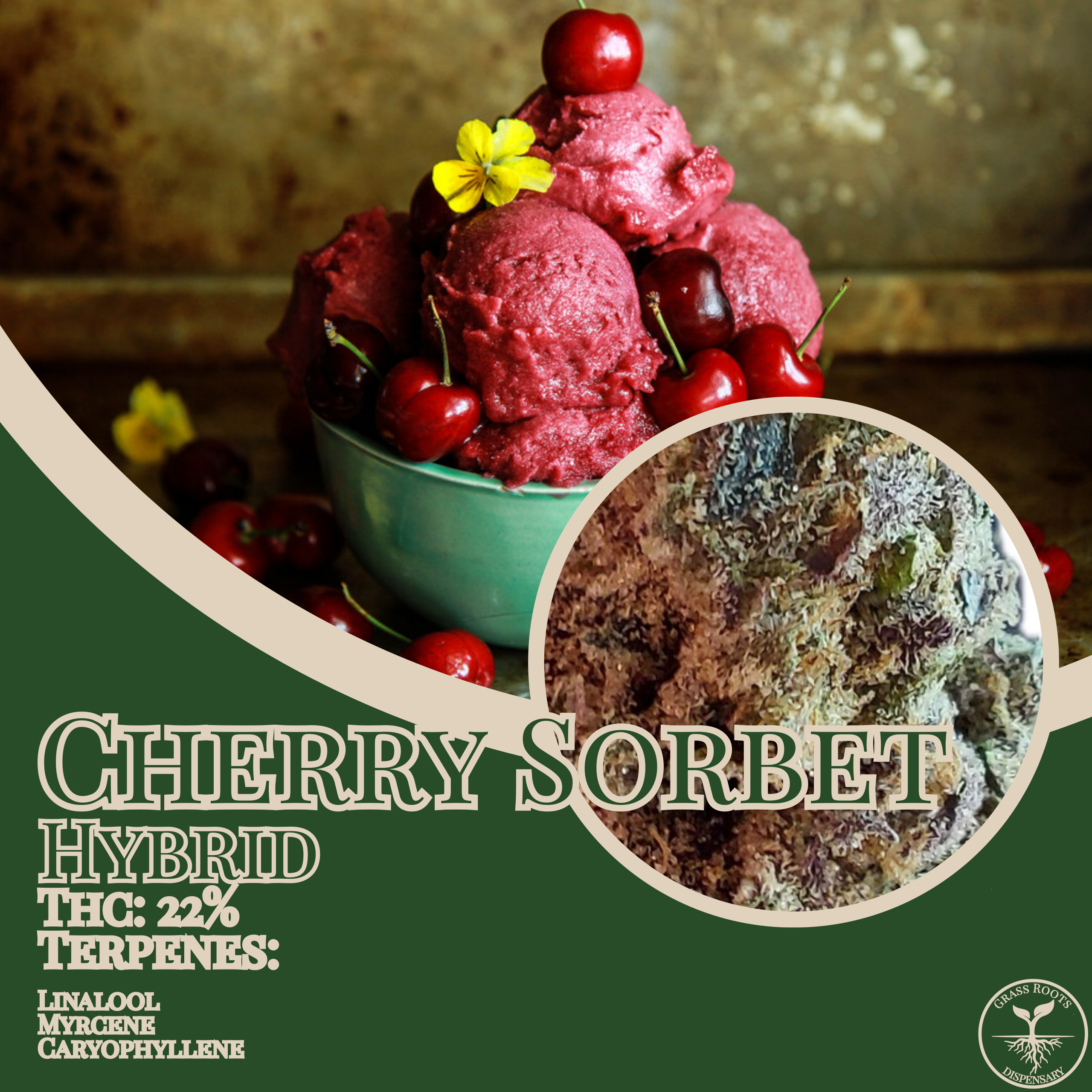
Cherry Sorbet from Vivid pairs dessert-inspired genetics with an indica-hybrid profile that has plenty to explore beyond its name. At 22% THC, this week’s featured flower is led by caryophyllene, myrcene, and linalool, bringing together warm spice, earthy herbs, and softer floral character alongside the sweeter influence associated with the cultivar.
With a name like Cherry Sorbet, sweet fruit and dessert-inspired character probably come to mind first. But the terpene profile of this Vivid batch gives us considerably more to talk about.
From Vivid, this indica-hybrid comes in at 22% THC with caryophyllene, myrcene, and linalool leading the terpene profile.
That combination creates contrast beneath the sweeter identity of the cultivar. Caryophyllene brings warm pepper and spice, myrcene contributes earthy and herbal depth, and linalool adds softer floral character. The result is a profile with several different aromatic families working together.
Getting to Know Cherry Sorbet
Vivid identifies Cherry Sorbet as an indica-dominant hybrid created from D33 × Cherry OG bx.
D33 is associated with dessert-style genetics, while Cherry OG brings cherry and classic OG influence into the family tree. Put those branches together and the name Cherry Sorbet starts to make a little more sense.
But genetics only give us part of the picture. For this Kentucky product, the actual batch information tells us what deserves the closest look: 22% THC with caryophyllene, myrcene, and linalool leading the terpene profile.
Why Cherry Sorbet Stands Out
Cherry Sorbet is a good example of the difference between what a strain name suggests and what the product label actually tells us.
The name points toward cherry sweetness and dessert-inspired character. The terpene profile adds earth, herbs, peppery spice, and florals to that picture.
That is where things become more interesting. Instead of looking at Cherry Sorbet as one simple flavor idea, we can see how several aromatic compounds contribute different layers to the overall cultivar.
It also demonstrates why looking beyond THC percentage can make learning about medical cannabis products much more informative.
Cherry Sorbet Terpene Profile
Caryophyllene
Caryophyllene leads this Cherry Sorbet batch with warm, peppery, and spicy aromatic character. The terpene also occurs naturally in black pepper, cloves, and cinnamon. Against a cultivar with a dessert-inspired identity, that spice gives the profile an interesting counterpoint to its sweeter characteristics.
Myrcene
Myrcene moves the profile toward earthier territory. Commonly associated with earthy, herbal, and musky aromas, myrcene is also naturally present in plants such as hops, thyme, and mango. Here, it adds depth beneath the brighter and sweeter characteristics associated with Cherry Sorbet.
Linalool
Linalool rounds out the top three with softer floral and botanical character. Also naturally present in plants such as lavender, linalool gives this terpene lineup another point of contrast. Spice, earth, herbs, and florals can all sit within the same product profile.
Cherry Sorbet Flavor and Aroma
Cherry Sorbet’s genetics point toward the sweeter side of the spectrum, with cherry, berry, creamy, earthy, and classic OG-style characteristics commonly associated with the cultivar.
This Kentucky batch’s terpene lineup gives that description more dimension. Caryophyllene adds peppery warmth, myrcene contributes earthy herbs, and linalool introduces softer floral notes.
Think sweet cherry and berry-inspired character layered over earth, herbs, warm spice, and softer floral notes rather than straightforward sweetness alone.
A Closer Look at the Profile
22% THC gives us one measurement for this Kentucky batch of Cherry Sorbet, but there is much more information available once we move beyond that single number.
The leading terpenes each contribute a different aromatic family. Caryophyllene brings spice, myrcene brings earthy and herbal character, and linalool adds a floral element.
That diversity is useful because it shows why two products with similar THC percentages can still have very different chemical and aromatic profiles.
THC tells us something about the product. The terpene profile helps us understand another part of what makes this particular batch distinctive.
What the Indica-Hybrid Label Tells Us
Vivid classifies Cherry Sorbet as an indica-dominant hybrid. That classification gives us one way to describe the cultivar, but it does not provide a complete picture of the chemistry inside a particular batch.
It does not tell us the THC percentage. It does not identify the leading terpenes. And it does not explain how those terpenes relate to one another.
For this Kentucky batch, we can add those details: 22% THC with caryophyllene, myrcene, and linalool leading the terpene profile.
The indica-hybrid label is a starting point. The rest of the product information helps fill in the picture.
What Patients Can Learn From It
Cherry Sorbet gives us several useful examples of what to look for when learning about a medical cannabis product.
Genetics can provide context for a cultivar’s background
A strain name can hint at aromatic characteristics without telling the complete story
THC percentage represents only one measurement on the product label
Individual terpenes contribute different aromatic characteristics
Looking at classification, cannabinoids, terpenes, and genetics together provides more information than relying on any one detail alone
Why It Made the Cut at Grass Roots
Cherry Sorbet made the cut because there is an interesting contrast between the name, genetics, and actual Kentucky batch profile.
Vivid’s D33 × Cherry OG bx genetics establish the cultivar’s dessert-inspired foundation, while caryophyllene, myrcene, and linalool give this particular batch a combination of warm spice, earthy herbs, and softer floral character.
At 22% THC, it also gives us another opportunity to look beyond the most visible number on the label and examine the other information available to Kentucky medical cannabis patients.
That is what Strain of the Week at Grass Roots Kentucky is for: helping patients understand not just what is written on the package, but what those details can tell us about the product inside.
Explore Cherry Sorbet
Want to learn more about this week’s featured strain? View Cherry Sorbet from Vivid on the Grass Roots Kentucky medical cannabis menu for current product information.
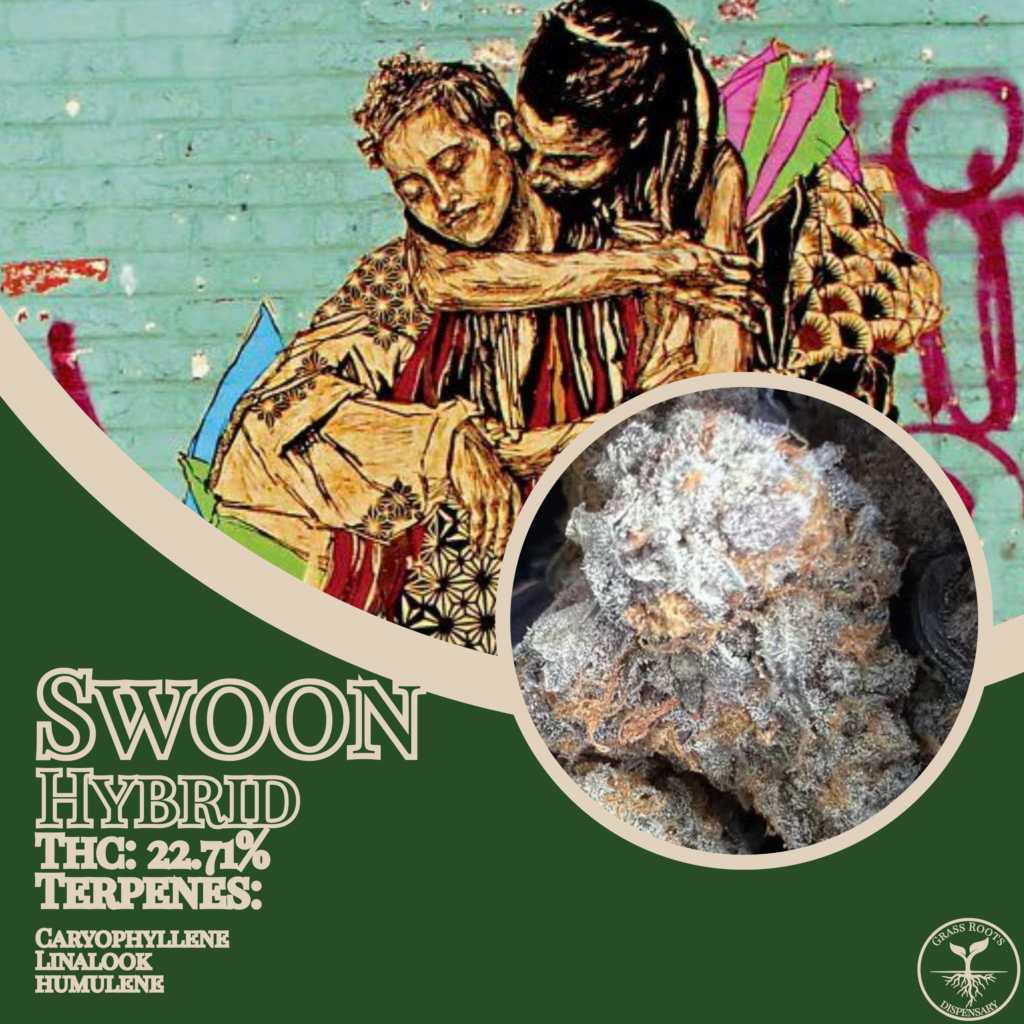
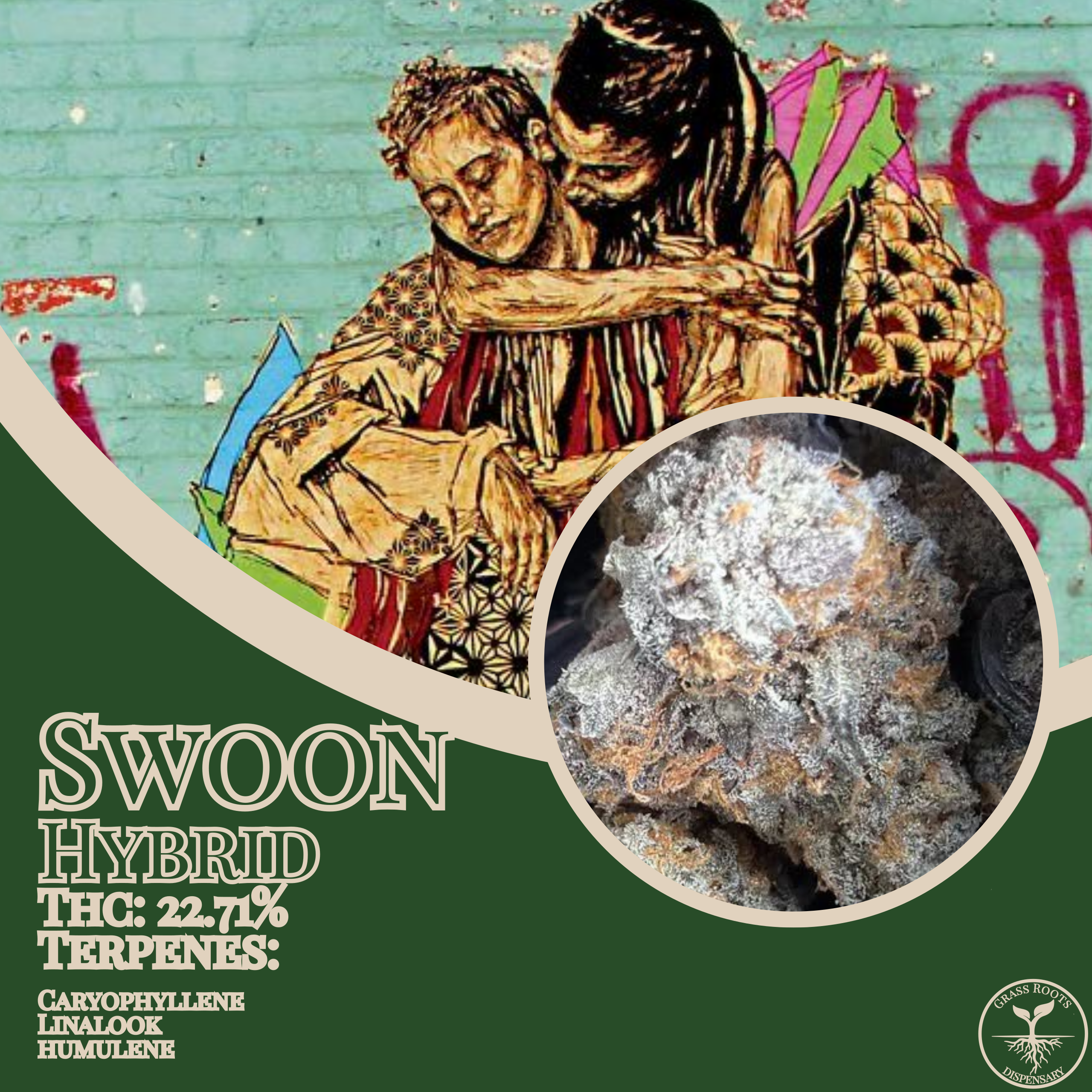
Swoon from Cresco brings together a three-part genetic lineage and a Kentucky batch profile worth looking at closely. At 22.71% THC, this week’s featured hybrid is led by caryophyllene, linalool, and humulene, creating an aromatic profile that moves between warm spice, softer floral character, and earthy, herbal depth.
Some strain names give you a pretty good idea of what to expect from the aroma. Swoon is not one of them — and that gives us a good reason to dig into the label.
From Cresco, this hybrid comes in at 22.71% THC with caryophyllene, linalool, and humulene among the leading terpenes in this Kentucky batch.
That combination creates an interesting aromatic structure. Caryophyllene brings warm pepper and spice, linalool introduces softer floral character, and humulene contributes earthy and herbal notes. It is a profile with contrast, and there is considerably more behind it once we look at the genetics.
Getting to Know Swoon
Swoon was bred in collaboration with Purple City Genetics and brings together three parent strains: F1 Durb, Gushers, and Street Guru.
Cresco’s broader description of the cultivar points toward warm sweetness, gas, floral character, and sugary notes. But individual batches can express different terpene profiles, which is why looking at the actual product information matters.
For this Kentucky batch, caryophyllene leads the way, while linalool and humulene give us two very different supporting aromatic families to explore.
Why Swoon Stands Out
The most interesting thing about this Swoon batch is how different aromatic families sit alongside one another.
Caryophyllene gives the profile its peppery and spicy backbone. Linalool moves toward softer floral territory, while humulene brings things back toward earth, herbs, and woody character.
That creates a useful contrast. Instead of three leading terpenes pointing in essentially the same aromatic direction, each one contributes something noticeably different.
It is also another reminder that the strain name and THC percentage are only the beginning. The details on the product label can give us a much better understanding of what makes a particular batch distinctive.
Swoon Terpene Profile
Caryophyllene
Caryophyllene leads this Swoon batch and establishes its warm, spicy side. This terpene is commonly associated with peppery, woody, and spicy aromas and is also naturally present in black pepper, cloves, and cinnamon. Its position near the top of the profile gives us an important clue about the aromatic structure of this particular flower.
Linalool
Linalool brings a very different aromatic family into the mix. Commonly associated with floral, botanical, and lightly sweet characteristics, linalool is also naturally present in lavender. Alongside caryophyllene, it creates a contrast between warm spice and softer floral notes.
Humulene
Humulene adds another layer with earthy, herbal, woody, and sometimes subtly spicy aromatic characteristics. It is also naturally present in hops and shares some structural similarities with caryophyllene. In Swoon, humulene helps deepen the profile and gives the floral character of linalool something earthier to sit against.
Swoon Flavor and Aroma
Swoon is generally described as having a layered aromatic profile built around warm sweetness, floral character, and deeper gas-like notes.
The Kentucky batch gives us additional detail. Caryophyllene provides warm pepper and spice, linalool brings a softer floral element, and humulene adds earthy and herbal depth.
Think warm spice, floral sweetness, earth, herbs, and deeper aromatic notes rather than one simple flavor category from beginning to end.
A Closer Look at the Profile
22.71% THC gives us one measurement for this batch of Swoon, but the terpene information adds considerably more detail.
Caryophyllene is the most prominent of the three terpenes we are highlighting, while linalool and humulene introduce floral and earthy dimensions around that spicy foundation.
There is another useful lesson here. General descriptions of Swoon frequently identify a different set of dominant terpenes. That does not make either profile wrong — cannabis chemistry can vary between harvests, cultivation environments, and individual batches.
For a patient looking at a particular product, the information attached to that actual batch is what deserves the closest attention.
What the Hybrid Label Tells Us
Swoon is classified as a hybrid, reflecting genetics that bring together multiple branches of the cannabis family tree.
But just like the words indica and sativa, “hybrid” is not a complete chemical description. It does not tell us how much THC is present, which terpenes lead the batch, or how those aromatic compounds are distributed.
Here, the rest of the label fills in those details: 22.71% THC with a profile highlighted by caryophyllene, linalool, and humulene.
The classification gives us a starting point. The product data gives us the details.
What Patients Can Learn From It
Swoon gives us a useful example of how much information can sit behind a single strain name.
Genetics can help explain where a cultivar comes from
THC percentage is only one part of the product profile
Different terpenes contribute different aromatic characteristics
Terpene profiles can vary between batches of the same cultivar
Batch-specific information provides important context beyond general strain descriptions
Why It Made the Cut at Grass Roots
Swoon made the cut because both the genetics and the batch-specific chemistry give us something worth exploring.
Its F1 Durb, Gushers, and Street Guru lineage gives the cultivar an interesting background, while this Cresco batch brings together caryophyllene, linalool, and humulene for a profile that moves through spice, florals, earth, and herbs.
It also gives us another real-world example of why we pay attention to the actual product information instead of relying exclusively on generic strain descriptions.
That is what Strain of the Week at Grass Roots Kentucky is for: helping medical cannabis patients look beyond the name and understand more of the information behind the product.
Explore Swoon
Want to learn more about this week’s featured strain? View Swoon from Cresco on the Grass Roots Kentucky medical cannabis menu for current product information.
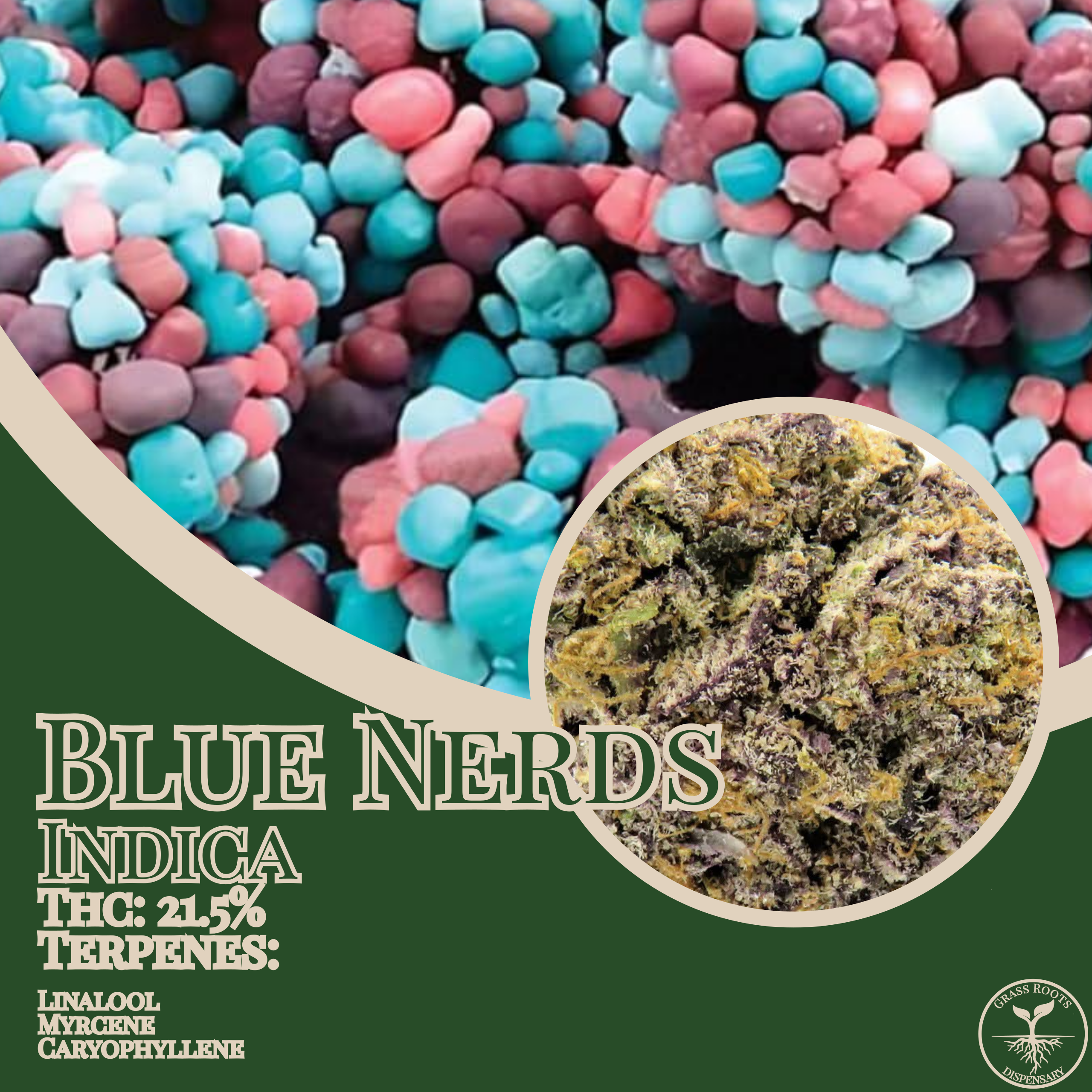
Blue Nerds from High Supply pairs a candy-inspired name with a terpene profile that has plenty of depth behind it. At 21.5% THC, this week’s featured indica is led by linalool, myrcene, and caryophyllene, creating an aromatic profile that moves between softer floral character, earthy herbs, and warm spice.
With a name like Blue Nerds, it is easy to expect a profile built entirely around bright fruit and candy-like sweetness. This particular High Supply batch gives us something more layered to talk about.
From High Supply, this indica comes in at 21.5% THC with linalool, myrcene, and caryophyllene leading the terpene profile.
That combination moves in several aromatic directions at once. Linalool contributes softer floral character, myrcene brings earth and herbs, and caryophyllene adds warm pepper and spice. Together, they give Blue Nerds more depth than its candy-inspired name might suggest.
Getting to Know Blue Nerds
Blue Nerds is a particularly interesting strain to research because the name does not point to one universally documented genetic line. Different versions of Blue Nerds have circulated with different reported parentage, making the name itself less useful for identifying a specific product than you might expect.
For this week’s feature, that makes the information from the actual High Supply product especially valuable. Rather than assuming genetics or chemistry based on a strain name, we can focus on what we know about this batch: its 21.5% THC content, indica classification, and terpene profile led by linalool, myrcene, and caryophyllene.
Why Blue Nerds Stands Out
The terpene order is one of the first things worth noticing about this Blue Nerds batch.
Linalool leads the profile, followed by myrcene and caryophyllene. That puts a terpene associated with floral and botanical aromas ahead of the earthier and spicier compounds in the top three.
It is a useful reminder that strain names can create expectations, but the actual product profile can tell a more detailed story. A candy-inspired name does not mean every prominent aromatic compound is going to fall neatly into a sweet or fruit-forward category.
This High Supply batch gives us floral, earthy, herbal, and spicy characteristics to explore — all from the three leading terpenes alone.
Blue Nerds Terpene Profile
Linalool
Linalool leads this Blue Nerds batch and gives us a particularly interesting place to start. Commonly associated with floral, botanical, and lightly sweet aromas, linalool also occurs naturally in plants such as lavender. As the leading terpene here, it helps establish the softer aromatic side of the profile.
Myrcene
Myrcene brings considerably deeper aromatic territory. Commonly associated with earthy, herbal, and musky characteristics, myrcene can also be found naturally in plants including hops, thyme, and mango. Alongside linalool, it creates contrast between softer floral notes and a deeper herbal foundation.
Caryophyllene
Caryophyllene rounds out the top three with warmth and spice. It occurs naturally in plants and spices including black pepper, cloves, and cinnamon and is commonly associated with peppery, woody, and spicy aromatic characteristics. Here, it adds another layer beneath the floral and earthy elements already present.
Blue Nerds Flavor and Aroma
Blue Nerds is generally associated with sweet and fruit-forward aromatic territory, with berry characteristics frequently appearing in descriptions of cultivars carrying the name.
But the actual terpene information from this High Supply batch adds more context. Leading linalool points toward softer floral character, myrcene contributes earth and herbs, and caryophyllene introduces peppery spice.
That makes this a profile worth thinking about in layers: sweet and fruit-associated characteristics around the strain name, with floral, earthy, herbal, and spicy aromatic compounds giving the specific batch additional depth.
A Closer Look at the Profile
21.5% THC gives us one measurement for this batch of Blue Nerds, but it does not tell us everything that makes the product distinctive.
The terpene lineup adds much more detail. Linalool leads with softer floral character, myrcene provides earthy and herbal depth, and caryophyllene brings warm spice.
The order matters, too. Looking only at a list of terpenes tells you which compounds are present, while knowing which ones lead the profile gives you additional information about the chemistry of that particular batch.
The more of the label you understand, the more useful information you have beyond THC percentage alone.
What the Indica Label Tells Us
High Supply classifies this Blue Nerds flower as an indica. That gives patients one piece of information about the product, but it should not be mistaken for a complete chemical description.
Terms such as indica, sativa, and hybrid are widely used to organize cannabis cultivars, while cannabinoid and terpene information provides another way to examine what is actually present in a specific batch.
In this case, we know the product is classified as an indica, contains 21.5% THC, and has a terpene profile led by linalool, myrcene, and caryophyllene.
Putting those pieces together gives us more information than relying on any single label by itself.
What Patients Can Learn From It
Blue Nerds gives us an especially useful lesson in why product-specific information matters.
One strain name can sometimes be associated with more than one reported genetic lineage
THC percentage is only one measurement on a medical cannabis label
Terpene order can provide additional context about a specific batch
Indica, sativa, and hybrid classifications do not describe the complete chemical profile
Batch-specific product information is more useful than assuming every product with the same strain name will be identical
Why It Made the Cut at Grass Roots
Blue Nerds made the cut because this is exactly the kind of strain that rewards looking beyond the name.
High Supply’s 21.5% THC batch gives us a terpene profile with clear contrast. Linalool leads with floral character, myrcene brings earthy and herbal depth, and caryophyllene finishes the top three with warm spice.
Even the uncertainty surrounding the broader Blue Nerds family becomes useful from an educational perspective. When the same strain name can appear alongside different reported genetics, the information attached to the actual product becomes even more important.
That is what Strain of the Week at Grass Roots Kentucky is for: taking a closer look at the information behind medical cannabis products and helping patients understand what those details actually mean.
Explore Blue Nerds
Want to learn more about this week’s featured strain? View Blue Nerds from High Supply on the Grass Roots Kentucky medical cannabis menu for current product information.